microcomputer
A microcomputer is a complete computer on a smaller scale and is generally a synonym for the more common term, personal computer or PC, a computer designed for an individual.
History of microcomputers
The term microcomputer dates back to the 1970s. The advent of the Intel 4004 microprocessor in 1971, and later the Intel 8008 and Intel 8080 microprocessor in 1972 and 1974 respectively, paved the path to the creation of the microcomputer.
The first microcomputer was the Micral, released in 1973 by Réalisation d’Études Électroniques (R2E). Based on the Intel 8008, it was the first non-kit computer based on a microprocessor. In 1974, the Intel 8008-based MCM/70 microcomputer was released by Micro Computer Machines Inc. (later known as MCM Computers).
Where a microcomputer fits in
The ascending hierarchy of general computer sizes is as follows:
- Embedded systems, which are fixed inside something and don’t support direct human interaction but nonetheless meet all other criteria of microcomputers;
- Microcomputers;
- Workstations, formerly described as a more powerful personal computer for special applications;
- Minicomputer , now called mid-range servers;
- Mainframes, which are now usually referred to by manufacturers as large servers;
- Supercomputers, large servers, sometimes including systems of computers using parallel processing; and
- Parallel processing system, a system of interconnected computers that work on the same application together, sharing tasks that can be performed concurrently.
Types of Micro Computer
Most workstations are also types of micro computer, for the same reason, although some personal computer is as fast as the fastest workstation. And a computer used by more than one person (a multi-user computer) is still a microcomputer as long as it has a microprocessor for its CPU.
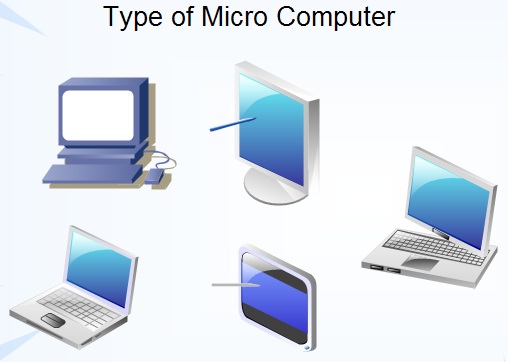
Notebook
Notebook is the smallest microcomputer, which can be ultra-mobile3 inches thick with less than 3 pounds lightweight and smaller than a briefcase, allow for easy setup in a room. A notebook can be effectively connected to the Internet ISP via a cable or Wi-Fi.
Laptop
Laptop microcomputer is bigger than the notebook computer powered by a battery and designed for low power consumption, which can be smaller than a briefcase. Although laptops and desktop computers have same capabilities. A laptop also has a thin display screen with attached keyboard and a touchpad used for navigation.
Desktop
Desktops are personal computers and bigger than notebooks and laptops. These microcomputers consist ofthe system unit, keyboard and monitor. Desktop microcomputers are cheaper than laptops or notebooks. Unlike a notebook,which isultra-mobile, a desktopmicrocomputeris stay at one location. The desktop microcomputers are more reliable than notebooks and laptops and easy to repair.
Components of Microcomputer
Microprocessor:
Microprocessor has two parts arithmetic logical unit and control unit. All these units help to system to perform calculations, execution of command and handling the control of devices.
Arithmetic logical Unit:
Arithmetic logical unit is calculation unit in microcomputer. It is also known logical unit. It performs addition, subtraction, multiplication, complement or many more operations. To perform this calculations ALU unit used registers, multiplexer, adder, half adder or flags. Flags like carry flag, zero flag, status flag, overflow flag etc.
Control unit:
Control unit controls the execution and sequence of instructions. CU receive instruction from devices ,convert the instruction into a specific format to access the location of data in memory and give the control to ALU for performing action on specific instructions. Control unit control the buses, registers, mux and circuits.
Memory unit:
Memory unit control inflow and outflow of data in memory by using many memory management techniques like FIFO, LIFO, OPR, LRU etc.
microcomputer we have two types of memory
1) Volatile and 2) Non-volatile.
Volatile: Memory that stores data for short time of period till the light is switch on.
Non-Volatile: Memory that stores data permanently.
What is a mainframe?
Mainframes are data servers designed to process up to 1 trillion web transactions daily with the highest levels of security and reliability.
Mainframes are computers
At their core, mainframes are high-performance computers with large amounts of memory and processors that process billions of simple calculations and transactions in real-time.
How are mainframes unique?
The IBM mainframe is uniquely engineered to:
- Run common operating systems like Linux, as well as specialized operating a systems such as z/OS and software to take advantage of the unique hardware capabilities.
- Support more simultaneous transactions and higher levels of throughput (I/O) compared to other computers through built-in capacity on demand and a built-in Internal Shared Memory solution.
- Deliver the highest levels of security by building cryptographic cards into the hardware.
- Offer resiliency through multiple layers of redundancy for every component (power supplies, cooling, backup batteries, CPUs, I/O components, cryptography modules) and testing for extreme weather conditions.
What does a mainframe look like?
Today’s mainframes are much smaller than the early “Big Iron” machines. With a standard 19” rack, the latest mainframe seamlessly coexists with other platforms in the data center. One z15 single-frame system requires 75 percent less floor space than x86 2U servers running the same workloads and throughput – and reduces power consumption by 40 percent.

Who uses IBM mainframes?
Today, many of the world’s top companies use mainframes — 44 of the top 50 banks, many government and healthcareorganizations, and all top 10 insurers.
workstation
A workstation is a computer intended for individual use that is faster and more capable than a personal computer.
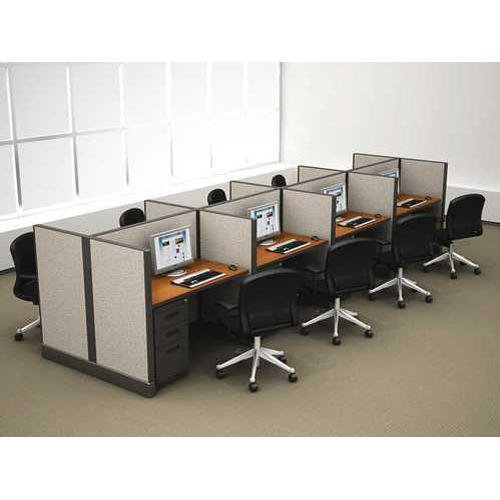
Features of workstation
- Error-correcting code (EEC) memory support
- Additional memory sockets for registered modules
- Multiple processor sockets for more powerful CPUs
- Multiple displays
- Reliable operating systems (OSs) with advanced features
- High-performance graphics cards.
supercomputer
The first commercially successful supercomputer, the CDC (Control Data Corporation) 6600 was designed by Seymour Cray. Released in 1964, the CDC 6600 had a single CPU and cost $8 million — the equivalent of $60 million today. Cray went on to found a supercomputer company under his name in 1972.
Top 5 world’s fastest supercomputers

![Tianhe-2 [TH-2/MilkyWay-2]](https://images-idgesg-net.cdn.ampproject.org/i/s/images.idgesg.net/images/article/2018/06/tianhe-2_milkyway-2_national_super_computing_center_in_guangzhou_professor_yutong_lu_1200x800-100762103-large.jpg)


 International Trade