A single page of text from 1941 is a powerful reminder that the desire for peace and security drove the creation of today’s global economic system. The global rules that underpin our multilateral economic system were a direct reaction to the Second World War and a desire for it to never be repeated.
How the GATT came into being
The lead negotiators for the creation of the GATT profoundly disagreed on the level of ambition to be achieved but finally overcame their differences.
The GATT years
From 1948 to 1994, the GATT provided the rules for much of world trade and presided over periods that saw some of the highest growth rates in international commerce. It seemed well-established but throughout those 47 years, it was a provisional agreement and organization.
Uruguay round
The Uruguay Round was the 8th round of Multilateral Trade Negotiations (MTN) conducted within the framework of the General Agreement on Tariffs and Trade (GATT), spanning from 1986 to 1994 and embracing 123 countries as “contracting parties”. The negotiations and process ended with the signing of the Final Act of the Marrakesh Agreement in April 1994 at Marrakesh, Morocco. The round led to the creation of the World Trade Organization (WTO)
The main achievements of the Uruguay Round included:
1- A trade-weighted average tariff cut of 38%;
2- Conclusion of the Agreement on Agriculture which brought agricultural trade for the first time under full GATT disciplines;
3- Adoption of the General Agreement of trade in Services (GATS);
4- The Agreement on Trade-Related Aspects of Intellectual Property Rights (TRIPS);
5- The Agreement on Trade-Related Investment Measures (TRIMS);
6- The creation of unified and predictable dispute settlement mechanism.
7- Confirmation f the trade Policy Review Mechanism (TPRM);
8- The establishment of the WTO, which administers 15 multilateral, and four plurilateral trade agreements
What is the WTO?
The World Trade Organization (WTO) is the only global international organization dealing with the rules of trade between nations. At its heart are the WTO agreements, negotiated and signed by the bulk of the world’s trading nations and ratified in their parliaments. The goal is to help producers of goods and services, exporters, and importers conduct their business.
Birth of the WTO
The WTO’s creation on 1 January 1995 marked the biggest reform of international trade since the end of the Second World War. Whereas the GATT mainly dealt with trade in goods, the WTO and its agreements also cover trade in services and intellectual property. The birth of the WTO also created new procedures for the settlement of disputes.
Functions of WTO
The WTO is run by its member governments. All major decisions are made by the membership as a whole, either by ministers (who usually meet at least once every two years) or by their ambassadors or delegates (who meet regularly in Geneva).
Trade negotiations
The WTO agreements cover goods, services and intellectual property. They spell out the principles of liberalization, and the permitted exceptions. They include individual countries’ commitments to lower customs tariffs and other trade barriers, and to open and keep open services markets. They set procedures for settling disputes. These agreements are not static; they are renegotiated from time to time and new agreements can be added to the package. Many are now being negotiated under the Doha Development Agenda, launched by WTO trade ministers in Doha, Qatar, in November 2001.
Implementation and monitoring
WTO agreements require governments to make their trade policies transparent by notifying the WTO about laws in force and measures adopted. Various WTO councils and committees seek to ensure that these requirements are being followed and that WTO agreements are being properly implemented. All WTO members must undergo periodic scrutiny of their trade policies and practices, each review containing reports by the country concerned and the WTO Secretariat.
Dispute settlement
The WTO’s procedure for resolving trade quarrels under the Dispute Settlement Understanding is vital for enforcing the rules and therefore for ensuring that trade flows smoothly. Countries bring disputes to the WTO if they think their rights under the agreements are being infringed. Judgements by specially appointed independent experts are based on interpretations of the agreements and individual countries’ commitments.
Building trade capacity
WTO agreements contain special provision for developing countries, including longer time periods to implement agreements and commitments, measures to increase their trading opportunities, and support to help them build their trade capacity, to handle disputes and to implement technical standards. The WTO organizes hundreds of technical cooperation missions to developing countries annually. It also holds numerous courses each year in Geneva for government officials. Aid for Trade aims to help developing countries develop the skills and infrastructure needed to expand their trade.
Outreach
The WTO maintains regular dialogue with non-governmental organizations, parliamentarians, other international organizations, the media and the general public on various aspects of the WTO and the ongoing Doha negotiations, with the aim of enhancing cooperation and increasing awareness of WTO activities.
Impact of WTO on Indian economy
The WTO has both favorable and non-favorable on Indian economy Favorable impact :-
1.Increase in export earning
i)Growth in merchandise export;
The establishment of the has increase the exports of developing countries because of reduction in tariff andi non-tariff trade barrier India’s merchandise havei increased from 32 billion US S( 1995) to 185 billion US S(2008-09)
ii. Growth in service exports
The WTO introduced the GATS (General Agreement on Trade in Service) that proved beneficial for countries like India. India’s service exports increasedi from 5 billion US $(1995) to 102 billion US S (200809) for 45% of India’s service.
2.Agriculture export
Reduction of trade barrier and domestic subsidies i raise the price of agricultural products in intermationali market, India hopes to benefit from this in the form of higher export earning from agriculture.
3. Textile and clothing
Textiles and clothing. The phasing out of the MFA (Multi Fiber Arrangements) will help the developing countries like India to increase the export of textile and clothing.
4.Foreign direct investment
As per the TRIMs agreement, restrictions on foreign investment have been withdrawn by the member nations of the WTO. This has benefited developing countries by way of foreign direct investment, euro equities and portfolio investment. In 2008-09 the net foreign direct investment in India was 35 billion USS.
Unfavorable impact
1. TRIPs (Trade Related aspects of Intellectual property)
Protection of intellectual property rights has been of the major concerns of the WTo. As a member of the WTO, India has to comply with the TRIPS standards.However, the agreement on TRIPs goes against thei Indian patent act 1970. in the following way.
i, Pharmaceutical sector
Under the Indian patent act 1970, only process chemicals, drugs and granted to patents are medicines. Thus, a company can legally manufacture it had the product patent. So Indian once pharmaceutical companies could sell good quality products at low prices. However under TRIPs agreement, product patents will also be granted thati will raise the prices of medicines, thus keeping them out of reach of the poor people, fortunately, most of drugs manufactured in India are off-patents and so will be less affected.
ii Agriculture will eventually control seedi food Indian.
Since the agreement on TRlPs extends to agriculturei as well; it will have considerable implications on Indian agriculture. The MNG, with their huge financial resources may also take over production. Since a large majority of population depends on agriculture for their livelihood, these developments will have serious consequences. Micro -organisms: under TRIPs agreement patenting has been extended to micro organisms as well. Thesei mills largely benefit MNCS and not developing like India.
2.TRIMs (Trade Related Investment Measures)
The agreement on TRIMs also favours developing nations as there are no rules in the agreement to formulate international rules for controlling business practices of foreign investors. Also, complying with the TRIMs agreement will contradict our objective of self-reliant growth based on locally available technology and resources.
3. GATS (General Agreement on Trade in Services)
The agreement on GATS will also favour the developed nations more. Thus, the rapidly growing services sector in India will now have to competei with now have to complete with giant foreign firms.i Moreover, since foreign firms are allowed to remit their profits, dividends and royalties to their parent company, it will cause foreign exchange burden for India.
4. Trade and Non-tariff barriers
Reduction of trade and non-tariff barriers has adversely affected the exports of various developing nations. Various Indian products have been hit by non-tariff barriers. These include textiles, marine product, floriculture, pharmaceutical basmati rice, carpets, leather goods etc.
A microcomputer is a complete computer on a smaller scale and is generally a synonym for the more common term, personal computer or PC, a computer designed for an individual.
History of microcomputers
The term microcomputer dates back to the 1970s. The advent of the Intel 4004 microprocessor in 1971, and later the Intel 8008 and Intel 8080 microprocessor in 1972 and 1974 respectively, paved the path to the creation of the microcomputer.
The first microcomputer was the Micral, released in 1973 by Réalisation d’Études Électroniques (R2E). Based on the Intel 8008, it was the first non-kit computer based on a microprocessor. In 1974, the Intel 8008-based MCM/70 microcomputer was released by Micro Computer Machines Inc. (later known as MCM Computers).
Where a microcomputer fits in
The ascending hierarchy of general computer sizes is as follows:
Embedded systems, which are fixed inside something and don’t support direct human interaction but nonetheless meet all other criteria of microcomputers;
Microcomputers;
Workstations, formerly described as a more powerful personal computer for special applications;
Minicomputer , now called mid-range servers;
Mainframes, which are now usually referred to by manufacturers as large servers;
Supercomputers, large servers, sometimes including systems of computers using parallel processing; and
Parallel processing system, a system of interconnected computers that work on the same application together, sharing tasks that can be performed concurrently.
Types of Micro Computer
Most workstations are also types of micro computer, for the same reason, although some personal computer is as fast as the fastest workstation. And a computer used by more than one person (a multi-user computer) is still a microcomputer as long as it has a microprocessor for its CPU.
Notebook
Notebook is the smallest microcomputer, which can be ultra-mobile3 inches thick with less than 3 pounds lightweight and smaller than a briefcase, allow for easy setup in a room. A notebook can be effectively connected to the Internet ISP via a cable or Wi-Fi.
Laptop
Laptop microcomputer is bigger than the notebook computer powered by a battery and designed for low power consumption, which can be smaller than a briefcase. Although laptops and desktop computers have same capabilities. A laptop also has a thin display screen with attached keyboard and a touchpad used for navigation.
Desktop
Desktops are personal computers and bigger than notebooks and laptops. These microcomputers consist ofthe system unit, keyboard and monitor. Desktop microcomputers are cheaper than laptops or notebooks. Unlike a notebook,which isultra-mobile, a desktopmicrocomputeris stay at one location. The desktop microcomputers are more reliable than notebooks and laptops and easy to repair.
Components of Microcomputer
Microprocessor:
Microprocessor has two parts arithmetic logical unit and control unit. All these units help to system to perform calculations, execution of command and handling the control of devices.
Arithmetic logical Unit:
Arithmetic logical unit is calculation unit in microcomputer. It is also known logical unit. It performs addition, subtraction, multiplication, complement or many more operations. To perform this calculations ALU unit used registers, multiplexer, adder, half adder or flags. Flags like carry flag, zero flag, status flag, overflow flag etc.
Control unit:
Control unit controls the execution and sequence of instructions. CU receive instruction from devices ,convert the instruction into a specific format to access the location of data in memory and give the control to ALU for performing action on specific instructions. Control unit control the buses, registers, mux and circuits.
Memory unit:
Memory unit control inflow and outflow of data in memory by using many memory management techniques like FIFO, LIFO, OPR, LRU etc.
microcomputer we have two types of memory
1) Volatile and 2) Non-volatile.
Volatile: Memory that stores data for short time of period till the light is switch on.
Non-Volatile: Memory that stores data permanently.
What is a mainframe?
Mainframes are data servers designed to process up to 1 trillion web transactions daily with the highest levels of security and reliability.
Mainframes are computers
At their core, mainframes are high-performance computers with large amounts of memory and processors that process billions of simple calculations and transactions in real-time.
How are mainframes unique?
The IBM mainframe is uniquely engineered to:
Run common operating systems like Linux, as well as specialized operating a systems such as z/OS and software to take advantage of the unique hardware capabilities.
Support more simultaneous transactions and higher levels of throughput (I/O) compared to other computers through built-in capacity on demand and a built-in Internal Shared Memory solution.
Deliver the highest levels of security by building cryptographic cards into the hardware.
Offer resiliency through multiple layers of redundancy for every component (power supplies, cooling, backup batteries, CPUs, I/O components, cryptography modules) and testing for extreme weather conditions.
What does a mainframe look like?
Today’s mainframes are much smaller than the early “Big Iron” machines. With a standard 19” rack, the latest mainframe seamlessly coexists with other platforms in the data center. One z15 single-frame system requires 75 percent less floor space than x86 2U servers running the same workloads and throughput – and reduces power consumption by 40 percent.
Who uses IBM mainframes?
Today, many of the world’s top companies use mainframes — 44 of the top 50 banks, many government and healthcareorganizations, and all top 10 insurers.
workstation
A workstation is a computer intended for individual use that is faster and more capable than a personal computer.
Features of workstation
Error-correcting code (EEC) memory support
Additional memory sockets for registered modules
Multiple processor sockets for more powerful CPUs
Multiple displays
Reliable operating systems (OSs) with advanced features
High-performance graphics cards.
supercomputer
The first commercially successful supercomputer, the CDC (Control Data Corporation) 6600 was designed by Seymour Cray. Released in 1964, the CDC 6600 had a single CPU and cost $8 million — the equivalent of $60 million today. Cray went on to found a supercomputer company under his name in 1972.
GIS is a computer-based information system that performs the activities of capturing, storing, manipulating, analyzing and displaying both spatial and non-spatial data in order to solve complex research, planning and management problems. It is a system of hardware and software that performs the above-mentioned activities on the information about the areas of the earth.
Purpose of the Global Information System (GIS)
The four main purposes of GIS modern survey is:
Support for General Research
Collection, manipulation, and utilization of spatial data in database management
Standardization and Customisation of cartographic production
Supports the decision-making process based on spatial data.
The fourth purpose can be explained by an example, where the engineering geologist evaluates the slope stability conditions of the area through GIS in order to decide a new and best route.
Architecture of global information system
FIGURE – INTERNATIONAL /Global INFORMATION SYSTEMS ARCHITECTURE The major dimensions for developing an international information systems architecture are the global environment, the corporate global strategies, the structure of the organization, the management and business processes, and the technology platform.
GIS has many potential uses in architectural research and practice, especially in the areas of urban design, community planning, and the site selection process.
GIS can also be used in conjunction with other visualization tools, such as AutoCAD,Google Earth, Adobe Illustrator, and Google Sketchup, to create dynamic and complex models.
Information on an area’s geology, soil type, infrastructure, and demographic information, for example, can all be taken into consideration when planning a structure or selecting a site.
The benefit of GIS lies in its analytical capabilities, wherein multiple phenomena can be linked by location and viewed through a spatial lens.
Building Global Information System Architecture
Business processes that have to respond to the demands of the global business environment have to be supported with a global information system architecture. Such an architecture is largely defined in terms of the backbone telecommunications .Aside from telecommunications, architectural plans need to include the processing hardware and software, as well as the design and siting of databases. In addition, global information systems development projects are more difficult because of greater variability of circumstances as the projects are carried out, the need to work in environments unfamiliar to some of the developers, and the complexity arising from these different environments.
Special Considerations of a Global Information System Architecture
1. Hardware and Software in Global Architecture
The barriers to a global information technology platform that are presented by the variety of computer equipment, and by the variety of systems and applications software, are not that different from the barriers encountered in a distributed system that is local to a single nation. There are the existing legacy systems to contend with and there are parochial interests of local management.
2. Databases
The challenge of defining a uniform structure of data for all business units across multiple national boundaries is more daunting than in a national case because of a greater variance among local business practices. The considerations of country risk, such as a potential threat to data centers, may necessitate other than the technologically optimal choice for the database sites, more stringent backup and disaster recovery policies, and a replication of databases.
3. Telecommunications Networks
A global telecommunications network is the principal platform of the corporate information system architecture of a multinational corporation. It is also the component that presents the toughest challenges
Implementation technology
• Providing an IT backbone that spans all countries the firm and its supply chain partners operate in;
• Ensuring the exchange of highly structured information across the world while allowing local customization in each country;.
• Managing a vast amount of information, including border procedures, duties and tariffs and exchange rates; and
• Providing a host of optimization techniques to facilitate the efficient operation of the global logistics network.
challenges to globalization of information systems. They include:
1.Cultural Differences
Cultural differences go to the very root of the national identity. At their worst, these differences express themselves as nationalism, the belief that one’s own nation would benefit from acting autonomously, rather than by harmonizing its initiatives with other members of a global community. Only be understanding the long-term incentives of the global division of labor can the nations and their decision makers overcome the tendency toward self-sufficiency and opportunism.
2. Language Barriers
Language barriers are often absent at the management level, but they manifest themselves acutely when information workers are expected to use systems with foreign language interfaces. Internationalization of software, with interfaces in local languages, is beginning to catch up with the needs. More difficult to overcome are the culture-based differences, such as perceptions of how absolute are time commitments, or the loyalty one owes the community versus loyalty to the employer. Personal exchanges and multicultural teamwork create better understanding and the ability to work around the differences. This understanding can be maintained by collaboration using various forms of teleconferencing and electronic meeting systems.
3. Political Risks
Multinational operations create by their very nature additional risks. Some of these political risks include legislation, punitive tax codes, and the instability of authority. Labor unrest or a threat to data centers can emerge in a given host country and it should be possible to move operations elsewhere rapidly.
4. Differences in tax laws and accounting procedures
Differences in tax reporting and accounting procedures among countries of the world may be expected to become narrower, but not disappear. In order to produce uniform consolidated results necessary for global coordination, it is necessary to deploy specialized information systems that perform such translation.
5. Legal differences
National laws and regulations differ widely. Particularly pertinent are the distinctions with respect to the labor laws and the protectionist laws trying to shield local information industry from the international competition. Legal differences discussed include the issue of laws limiting transborder data flows – the ability to bring data and information in and out of a country. Also discussed is the technological obstacle to global networking – the widely differing national telecommunications capabilities and regulations. In some countries of operation it may be necessary to deviate from the corporate hardware and software standards and acquire products of local vendors in order to accommodate expectations of good corporate citizenship.
Organic search is an effective method for traffic acquisition and sales promotion, but its conversion rates are not always high. Google AdWords is one tool that can help you promote your e-commerce site more efficiently and also boost sales. You can create and run ads using this tool in Google’s Search and advertising network.Google Adwords displays your ads depending on their relevance to the keywords used by the searcher(s). Your ads therefore will be transmitted to searchers interested in your products/brand. Since this tools works on ‘Pay Per Click’ basis, it helps you to save on your advertising budget. Furthermore, it provides in-depth insight to help you measure advertising effectiveness to assess the attractiveness of your marketing message.
2. Zendesk
Zendesk is the tool you should look for. It helps you to provide better customer service without having a customer service team. This tool has a plethora of advanced features that allow you to create customer support tickets, resolve tickets, use templatized solutions, create self-help sections, and track your customer service performance.
It collects all of the questions/issues raised by customers through phone calls, social networks, email, chat or search and compiles them in one place. You can even have proactive conversations with your customers using Zendesk and send them surveys. Brands like Groupon and Gilt are using this software for their customer service solution.
3. HOTJAR
Hotjar is an all-in-one analytics tools using heat maps for your website visitors. See how they click, where they move their mouse, and even record see recordings of their mouse activity on your website.
Their feedback system offers test tunnels so you know at what point your visitor is leaving so you can improve your system. Heat maps let you view visitor behavior on where they’re scrolling, clicking, and moving. In this way, follow the important behavioral of your customers for better user experience.
You can view Hotjar as a type of user testing in which you know how visitors are behaving so you understand how your website is working for them.
4. GOOGLE ANALYTICS
Conversions are key in online marketing. Google Analytics tracks website traffic for measuring those conversions. Measure your online sales and transaction history by monitoring user data analysis with e-commerce tracking. This tool needs some HTML and JavaScript coding skills in order to provide the maximum value. Meet your business needs whether you’re using the free product or their Analytics 360 Suite.
5. MAILCHIMP
One of the leaders in email marketing, MailChimp offers an easy to use way to let your customers know what’s going on in your business. Whether it’s recent news about your company or sharing a new product, you can be sure to let them in on what they need to know.
Create email campaigns that best suit your specific business. One of the great things about MailChimp is its marketing automation that helps in your marketing strategy. For example, send a reminder to visitors who left your online store without making a purchase. Or those who didn’t check out but may have something in their online cart. You can also find new customers by integrating with Facebook and Instagram.
6. UNBXD
With Unbxd, optimize your online site search by giving customers a more personalized experience. Enhance user experience with product recommendations. When customers are at your online store and see “recommended for you”, it can create a new sale for your business.
This tool lets you see a report of how users are finding out the right products. Unbxd asks, “Are you leaving money on the table?” The Commerce Search Study shows a shopper is more likely to buy if there’s a search bar on your store website.
Use Unbxd as a plugin for Shopify, too.
As a customer service software used by many big name companies, Zendesk is a leader in providing customer service through chat, phone, and email. You can take the ease off your organization’s departments by using this platform for your customer service needs.
This platform lets you connect with customers on a relationship level. It’s easy to setup and easy to use. If a customer has a help ticket, easily collaborate with the customer and the company.
One of the great things about Zendesk is it collects the data from those customer interactions and makes sure your business is in good light. It can also record response times so you can improve on certain areas of your online interactions.
7. OPTIMIZELY
User interface is just as important as user experience. It’s a part of it and they work together. With Optimizely, test different layouts and content to see what converts and performs best.
Get the full customer experience with A/B testing and build a better website for your visitors. The visual editor is easy to navigate and update any online content. Also, experiment with different behavioral targets. If a user searches for a winter coat and goes back to the home page, it remembers the user’s choice and the home page displays a shopping opportunity for winter coats.
8. CRAZY EGG
Similar to Hotjar, Crazy Egg lets you see where users click with heat maps. Just type in your URL and it will show you your heat map when you sign up for the 30-day free trial.
Most importantly, you may wonder why your visitors are not converting. Crazy Egg knows why they’re leaving so you can enhance your pages for better customer experience and makes sure your most important content is being seen and not ignored.
With overlay tool, view the number of clicks of all elements on a page and find out where the most clicks are and how they’re converting.
9. SEMRUSH
SEMRush claims itself as the all-in-one marketing tool. It is definitely a great tool if you’re looking into the analytics of all online marketing including social media, SEO, and PPC. This tool is powerful for competitor and advertising research.
When you type in the URL of your domain name, you are able to view domain analytics through organic and advertising research. Their video and display advertising is currently in beta, however, you can see all digital content without going to the actual provider.
SEMRush analyzes your content so it can perform better against your competitors.
10. SEARCH SPRING
A unique experience is the best experience. The customer feels welcomed when their search results are tailored to them.
Search Spring helps you develop a better search experience with advanced site search. You might think search boxes are the last thing on your list when it comes to your e-commerce website. The relevancy of this search tool allows the customer to see products related to their interest or search no matter what page they’re on.
11. SHOPIFY
This tool lets you create an online shop and a custom domain name. Use this in conjunction with the other tools mentioned above and create the ultimate experience. It doesn’t matter what kind of store you have, Shopify has what you need. It’s used by many online retailers worldwide.
Run your store with no coding experience and personalize your business website with hundreds of themes to choose from for your online store. Shopify does all the work for you.
Advantages of E-commerce enabled export import:-
Much faster transactions available 24/7.
Products and services are easy to find.
Easier time managing a business.
Doesn’t require much (if at all) physical space.
No geographical limitations translates as a bigger customer reach.
Higher quality of services and lower operational costs.
Increaserevenue
eCommerce site will eliminate or reduce workloads off sales and support force.
Reach niche market segments.
Expandclient base.
Loweroperating costs.
Bettercustomer service.
Advantages to Organizations
Advantages to Consumers
Advantages to Society
Advantages to Organizations
Using e-commerce, organizations can expand their market to national and international markets with minimum capital investment. An organization can easily locate more customers, best suppliers, and suitable business partners across the globe.
E-commerce helps organizations to reduce the cost to create process, distribute, retrieve and manage the paper based information by digitizing the information.
E-commerce improves the brand image of the company.
E-commerce helps organization to provide better customer services.
E-commerce helps to simplify the business processes and makes them faster and efficient.
E-commerce reduces the paper work.
E-commerce increases the productivity of organizations. It supports “pull” type supply management. In “pull” type supply management, a business process starts when a request comes from a customer and it uses just-in-time manufacturing way.
Advantages to Customers
It provides 24×7 support. Customers can enquire about a product or service and place orders anytime, anywhere from any location.
E-commerce application provides users with more options and quicker delivery of products.
E-commerce application provides users with more options to compare and select the cheaper and better options.
A customer can put review comments about a product and can see what others are buying, or see the review comments of other customers before making a final purchase.
E-commerce provides options of virtual auctions.
It provides readily available information. A customer can see the relevant detailed information within seconds, rather than waiting for days or weeks.
E-Commerce increases the competition among organizations and as a result, organizations provides substantial discounts to customers.
Advantages to Society
Customers need not travel to shop a product, thus less traffic on road and low air pollution.
E-commerce helps in reducing the cost of products, so less affluent people can also afford the products.
E-commerce has enabled rural areas to access services and products, which are otherwise not available to them.
E-commerce helps the government to deliver public services such as healthcare, education, social services at a reduced cost and in an improved manner.
Disadvantages of E-commerce enabled export import:-
No guarantee of product quality.
Customer loyalty becomes a bigger issue as there is a minimal direct customer-company interaction.
Inability to experience products beforehand leads to more checkout dropouts.
Anyone can start an online business, which sometimes leads to scam and phishing sites.
Hackers target web shops more often than you think.
Mechanical failures can get quite more punishing.
Ecommerce Is Highly Competitive.
Technical Disadvantages
There can be lack of system security, reliability or standards owing to poor implementation of e-commerce.
The software development industry is still evolving and keeps changing rapidly.
In many countries, network bandwidth might cause an issue.
Special types of web servers or other software might be required by the vendor, setting the e-commerce environment apart from network servers.
Sometimes, it becomes difficult to integrate an e-commerce software or website with existing applications or databases.
There could be software/hardware compatibility issues, as some e-commerce software may be incompatible with some operating system or any other component.
Non-Technical Disadvantages
Initial cost − The cost of creating/building an e-commerce application in-house may be very high. There could be delays in launching an e-Commerce application due to mistakes, and lack of experience.
User resistance − Users may not trust the site being an unknown faceless seller. Such mistrust makes it difficult to convince traditional users to switch from physical stores to online/virtual stores.
Security/ Privacy − It is difficult to ensure the security or privacy on online transactions.
Lack of touch or feel of products during online shopping is a drawback.
E-commerce applications are still evolving and changing rapidly.
Internet access is still not cheaper and is inconvenient to use for many potential customers, for example, those living in remote villages.
Desk Research is the research technique which is mainly acquired by sitting at a desk. Desk research is basically involved in collecting data from existing resources hence it is often considered a low cost technique as compared to field research, as the main cost is involved in executive’s time, telephone charges and directories. However, it could also be a complete waste of time and money if the researcher does not have the proper knowledge of how the research in performed.
What is desk research?
Desk research is another name for secondary research. Broadly speaking, there are two types of research activity: primary research (where you go out and discover stuff yourself); and secondary research (where you review what other people have done). Desk research is not about collecting data. Instead, your role as a user researcher carrying out desk research is to review previous research findings to gain a broad understanding of the field.
Why do desk research?
Before carrying out a field visit, developing a prototype, running a usability test, or embarking on any project that you want to be user centred, it makes sense to see what people have done in the past that relates to the product’s domain. Although it’s unlikely that anyone has carried out the exact research activity you’re planning, someone has almost certainly tried to answer related questions. Reviewing this research is the quickest and cheapest way to understand the domain.
Carrying out desk research is a critical first step, for at least three reasons:
If you don’t know what has gone before, you won’t know when you’ve discovered something new.
You’ll sound credible when you get face-to-face with users and stakeholders. If you’ve not done this “due diligence”, you’ll ask dumb or irrelevant questions and may find your participants cut your sessions short.
Failing to do preparatory research is disrespectful of your participants’ time. You may get less than an hour with a user of your system. Do you really want to waste half that time understanding the domain issues that you could have covered elsewhere?
How do you approach desk research?
At this point, I’ve had many user researchers tell me that they’re working on a bleeding edge design project so there isn’t any desk research to do. There’s a common misconception that no research exists.
In my experience, there is almost always something you can build upon. Here’s an approach I take to go about finding it. It helps me stay focussed but also makes sure that I remember to check all the possible nooks and crannies where relevant research findings may be hiding.
Desk research is very effective and can be conducted in starting phase of market research as it is quite quick and cheap and most of the basic information could be easily fetched which can be used as benchmark in the research process.
There are basically two types of desk research techniques:
Internal Desk Research – Internal desk research can be treated as the most reasonable starting point of research for any organization. Much Information could be generated internally within the organization as a course of normal process. Account related information which indicates what type of products are sold, in how much quantity and at what cost, sold to which type of customers including their geographical location and so on. The main advantage here in performing internal desk research is that it involves internal and existing organizational resources to organize the collected data in such a way that it is not only efficient but also usable. Internal desk research is comparatively very cheap and effective as internal recourses are deputed and the expenditure in getting data from outside is less.
External Desk Research – External Desk Research involves research done outside the organizational boundaries and collecting relevant information. These outside resources are described below:
Online Desk Research – There is incredible amount of data available online on internet. It’s important for organization to be information specific while fetching out this information as there are billions of pages available on internet. There could be two approaches for digging out the relevant information from internet, one is directly browsing the specific information from industrial, marketing or business sites and extracting the information out of these sites. Secondly, using the various search engines like http://www.google.com, http://www.yahoo.com, http://www.infoseek.go.com, http://www.altavista.com etc, for modulated searching. The important aspect here is to refine the searching techniques in such a way that results are promising and relevant. For this it is necessary that the researcher should know the importance of the research and follow the guideline intellectually to reduce the efforts made and time consumed in searching.
Government published data –Government usually publishes a great extent of data online that can be used in the research process. This data is related to social, financial and economical aspects. The government websites are mostly free to access and contains most prominent information. Thus, this could be the cheapest medium of gathering the information.
Customer desk research – One of the best and most prominent ways of extracting information for research is directly communicating with existing or prospect customer. Customers are the one who are considered the most informed as they are actually using products and services and are aware of the current market trends more than any other. Hence the feedback and information provided by customers is the most accurate and useful data which can be used most effectively in the further process of research.
What is Field Research?
Field research is defined as a qualitative method of data collection that aims to observe, interact and understand people while they are in a natural environment. For example, nature conservationists observe behavior of animals in their natural surroundings and the way they react to certain scenarios. In the same way, social scientists conducting field research may conduct interviews or observe people from a distance to understand how they behave in a social environment and how they react to situations around them.
Field research encompasses a diverse range of social research methods including direct observation, limited participation, analysis of documents and other information, informal interviews, surveys etc. Although field research is generally characterized as qualitative research, it often involves multiple aspects of quantitative research in it.
Field research typically begins in a specific setting although the end objective of the study is to observe and analyze the specific behavior of a subject in that setting. The cause and effect of a certain behavior, though, is tough to analyze due to presence of multiple variables in a natural environment. Most of the data collection is based not entirely on cause and effect but mostly on correlation. While field research looks for correlation, the small sample sizemakes it difficult to establish a causal relationship between two or more variables.
Methods of Field Research
Field research is typically conducted in 5 distinctive methods. They are:
Direct Observation
In this method, the data is collected via an observational method or subjects in a natural environment. In this method, the behavior or outcome of situation is not interfered in any way by the researcher. The advantage of direct observation is that it offers contextual data on people, situations, interactions and the surroundings. This method of field research is widely used in a public setting or environment but not in a private environment as it raises an ethical dilemma.
Participant Observation
In this method of field research, the researcher is deeply involved in the research process, not just purely as an observer, but also as a participant. This method too is conducted in a natural environment but the only difference is the researcher gets involved in the discussions and can mould the direction of the discussions. In this method, researchers live in a comfortable environment with the participants of the research, to make them comfortable and open up to in-depth discussions.
Ethnography
Ethnography is an expanded observation of social research and social perspective and the cultural values of an entire social setting. In ethnography, entire communities are observed objectively. For example, if a researcher would like to understand how an Amazon tribe lives their life and operates, he/she may chose to observe them or live amongst them and silently observe their day-to-day behavior.
Qualitative Interviews
Qualitative interviews are close-ended questions that are asked directly to the research subjects. The qualitative interviews could be either informal and conversational, semi-structured, standardized and open-ended or a mix of all the above three. This provides a wealth of data to the researcher that they can sort through. This also helps collect relational data. This method of field research can use a mix of one-on-one interviews, focus groups and text analysis.
Steps in Conducting Field Research
Due to the nature of field research, the magnitude of timelines and costs involved, field research can be very tough to plan, implement and measure. Some basic steps in the management of field research are:
Build the Right Team: To be able to conduct field research, having the right team is important. The role of the researcher and any ancillary team members is very important and defining the tasks they have to carry out with defined relevant milestones is important. It is important that the upper management too is vested in the field research for its success.
Recruiting People for the Study: The success of the field research depends on the people that the study is being conducted on. Using sampling methods, it is important to derive the people that will be a part of the study.
Data Collection Methodology: As spoken in length about above, data collection methods for field research are varied. They could be a mix of surveys, interviews, case studies and observation. All these methods have to be chalked out and the milestones for each method too have to be chalked out at the outset. For example, in the case of a survey, the survey design is important that it is created and tested even before the research begins.
Site Visit: A site visit is important to the success of the field research and it is always conducted outside of traditional locations and in the actual natural environment of the respondent/s. Hence, planning a site visit alongwith the methods of data collection is important.
Data Analysis: Analysis of the datathat is collected is important to validate the premise of the field research and decide the outcome of the field research.
Communicating Results: Once the data is analyzed, it is important to communicate the results to the stakeholders of the research so that it could be actioned upon.
Types of Field Research Notes
The four different kinds of field notes are:
Job Notes: This method of taking notes is while the researcher is in the study. This could be in close proximity and in open sight with the subject in study. The notes here are short, concise and in condensed form that can be built on by the researcher later. Most researchers do not prefer this method though due to the fear of feeling that the respondent may not take them seriously.
Field Notes Proper: These notes are to be expanded on immediately after the completion of events. The notes have to be detailed and the words have to be as close to possible as the subject being studied.
Methodological Notes: These notes contain methods on the research methods used by the researcher, any new proposed research methods and the way to monitor their progress. Methodological notes can be kept with field notes or filed separately but they find their way to the end report of a study.
Journals and Diaries: This method of field notes is an insight into the life of the researcher. This tracks all aspects of the researchers life and helps eliminate the Halo effect or any bias that may have cropped up during the field research.
Reasons to Conduct Field Research
Field research has been commonly used in the 20th century in the social sciences. But in general, it takes a lot of time to conduct and complete, is expensive and in a lot of cases invasive. So why then is this commonly used and is preferred by researchers to validate data? We look at 4 major reasons:
Overcoming lack of data: Field research resolves the major issue of gaps in data. Very often, there is limited to no data about a topic in study, especially in a specific environment. The problem might be known or suspected but there is no way to validate this without primary research and data. Conducting field research helps not only plug-in gaps in data but collect supporting material and hence is a preferred research method of researchers.
Understanding context of the study: In many cases, the data collected is adequate but field research is still conducted. This helps gain insight into the existing data. For example, if the data states that horses from a stable farm generally win races because the horses are pedigreed and the stable owner hires the best jockeys. But conducting field research can throw light into other factors that influence the success like quality of fodder and care provided and conducive weather conditions.
Increasing the quality of data: Since this research method uses more than one tool to collect data, the data is of higher quality. Inferences can be made from the data collected and can be statistically analyzed via the triangulation of data.
Collecting ancillary data: Field research puts the researchers in a position of localized thinking which opens them new lines of thinking. This can help collect data that the study didn’t account to collect.
Examples of Field Research
Some examples of field research are:
Decipher social metrics in a slum Purely by using observational methods and in-depth interviews, researchers can be part of a community to understand the social metrics and social hierarchy of a slum. This study can also understand the financial independence and day-to-day operational nuances of a slum. The analysis of this data can provide an insight into how different a slum is from structured societies.
Understand the impact of sports on a child’s development This method of field research takes multiple years to conduct and the sample size can be very large. The data analysis of this research provides insights into how the kids of different geographical locations and backgrounds respond to sports and the impact of sports on their all round development.
Study animal migration patterns Field research is used extensively to study flora and fauna. A major use case is scientists monitoring and studying animal migration patterns with the change of seasons. Field research helps collect data across years and that helps draw conclusions about how to safely expedite the safe passage of animals.
Advantages of Field Research
The advantages of field research are:
It is conducted in a real-world and natural environment where there is no tampering of variables and the environment is not doctored.
Due to the study being conducted in a comfortable environment, data can be collected even about ancillary topics.
The researcher gains a deep understanding into the research subjects due to the proximity to them and hence the research is extensive, thorough and accurate.
Disadvantages of Field Research
The disadvantages of field research are:
The studies are expensive and time-consuming and can take years to complete.
It is very difficult for the researcher to distance themselves from a bias in the research study.
The notes have to be exactly what the researcher says but the nomenclature is very tough to follow.
It is an interpretive method and this is subjective and entirely dependent on the ability of the researcher.
In this method, it is impossible to control external variables and this constantly alters the nature of the research.
Designing and testing of questionnaire
design and testing
Questionnaires are a potential source of bias and must be formulated very carefully to guarantee the quality of the data collected. From survey design to questionnaire testing, it is important to avoid errors in respondent comprehension and interpretation and to avoid influencing or offending respondents.
Questionnaire design
Designing a questionnaire requires detailed knowledge not only of the survey topic and the target population, but also of the technical potential of the chosen data collection method. Researchers need to be familiar with the existing scientific literature in their field and with any other surveys conducted in the same area. Reliable knowledge of the language, the ordinary or lay terms used to designate aspects of the situation under investigation, as well as of the cultural and cognitive skills needed to answer the questions, is also indispensable.
That knowledge is especially important for surveys on sensitive subjects (sexuality, violence, drug use) or involving specific populations (of particular cultural origins or social backgrounds). It is also needed for general population surveys which, by definition, encompass all categories of persons.
Generally speaking, questions are most effective when they are precise and clearly contextualized, short and formulated in simple language, and when the terms used cannot be misinterpreted. It is also extremely important not to ask leading questions, i.e. questions that may encourage respondents to choose a particular response or to answer in a particular way. These constraints may be difficult to reconcile, which is why questions must be tested and researchers should plan to speak with interviewers—respondents too, if possible—throughout the questionnaire preparation phase.
Questionnaire testing and pilot surveys
Survey protocol, data collection and questionnaire testing are fundamental components of the data production process. Testing provides a means to check whether the questionnaire is valid in itself (form; question formulation, including translation if relevant; overall structure and transitions between questions and/or question sets), and to validate the data collection protocol (interviewer recruitment and training; interpreter training where relevant; the tasks of contacting respondents and presenting the survey to them; tools used for follow-up in the field, etc.). This is an indispensable stage that must be planned for and adequately budgeted.
During the preliminary stages of questionnaire construction, it is extremely useful for members of the research project team to test the questionnaire by administering it among themselves.
Further along in the questionnaire formalization process, the interviewers must be brought in. There are various testing and validation methods, and several tests may be necessary, depending on the types of modification made (elimination or reformulation of questions, changes to the list of response categories or question order, etc.).
The tests are also an opportunity to develop, clarify or improve interviewer training, another crucial factor in data quality. The pilot survey, a sort of “dress rehearsal,” the last step before the full-scale survey is launched, is generally conducted at a larger scale. It serves to finalize the protocol and resolve any remaining problems.
While pilot and even full-scale surveys may be outsourced, the different testing phases are usually handled internally at INED in order to develop and fine-tune the overall survey protocol. These preliminary phases take time. In fact, they are the most time-consuming component of survey preparation. They may take from one to two years, depending on the project.
Sequence for Questionnaire Development
Step 1–Background
In this initial step, the purpose, objectives, research questions, and hypothesis of the proposed research are examined. Determining who is the audience, their background, especially their educational/readability levels, access, and the process used to select the respondents (sample vs. population) are also part of this step. A thorough understanding of the problem through literature search and readings is a must. Good preparation and understanding of Step1 provides the foundation for initiating Step 2.
Step 2–Questionnaire Conceptualization
After developing a thorough understanding of the research, the next step is to generate statements/questions for the questionnaire. In this step, content (from literature/theoretical framework) is transformed into statements/questions. In addition, a link among the objectives of the study and their translation into content is established. For example, the researcher must indicate what the questionnaire is measuring, that is, knowledge, attitudes, perceptions, opinions, recalling facts, behavior change, etc. Major variables (independent, dependent, and moderator variables) are identified and defined in this step.
Step 3–Format and Data Analysis
In Step 3, the focus is on writing statements/questions, selection of appropriate scales of measurement, questionnaire layout, format, question ordering, font size, front and back cover, and proposed data analysis. Scales are devices used to quantify a subject’s response on a particular variable. Understanding the relationship between the level of measurement and the appropriateness of data analysis is important. For example, if ANOVA (analysis of variance) is one mode of data analysis, the independent variable must be measured on a nominal scale with two or more levels (yes, no, not sure), and the dependent variable must be measured on a interval/ratio scale (strongly agree to strongly disagree).
Step 4–Establishing Validity
As a result of Steps 1-3, a draft questionnaire is ready for establishing validity. Validity is the amount of systematic or built-in error in measurement (Norland, 1990). Validity is established using a panel of experts and a field test. Which type of validity (content, construct, criterion, and face) to use depends on the objectives of the study. The following questions are addressed in Step 4:
Is the questionnaire valid? In other words, is the questionnaire measuring what it intended to measure?
Does it represent the content?
Is it appropriate for the sample/population?
Is the questionnaire comprehensive enough to collect all the information needed to address the purpose and goals of the study?
Does the instrument look like a questionnaire?
Addressing these questions coupled with carrying out a readability test enhances questionnaire validity. The Fog Index, Flesch Reading Ease, Flesch-Kinkaid Readability Formula, and Gunning-Fog Index are formulas used to determine readability. Approval from the Institutional Review Board (IRB) must also be obtained. Following IRB approval, the next step is to conduct a field test using subjects not included in the sample. Make changes, as appropriate, based on both a field test and expert opinion. Now the questionnaire is ready to pilot test.
Step 5–Establishing Reliability
In this final step, reliability of the questionnaire using a pilot test is carried out. Reliability refers to random error in measurement. Reliability indicates the accuracy or precision of the measuring instrument (Norland, 1990). The pilot test seeks to answer the question, does the questionnaire consistently measure whatever it measures?
The use of reliability types (test-retest, split half, alternate form, internal consistency) depends on the nature of data (nominal, ordinal, interval/ratio). For example, to assess reliability of questions measured on an interval/ratio scale, internal consistency is appropriate to use. To assess reliability of knowledge questions, test-retest or split-half is appropriate.
Time Frames for Planning
Organizations set goals across different time frames. McDonalds CEO striving to provide a 14% return to investors for at least ten years is an example of a long-term goal.
Long Range Plans
Focus on the long-term plans that usually take years to attain and sometimes even decades. However, it is up to each organization to decide the time span for their long-range goals. Managers must be very careful when planning long-range goals and take future environmental change into consideration. This is crucial in order to keep managers from planning too far ahead.
Intermediate Plans
These plans usually cover a time span of one to five years and are less tentative and subject to change than long-range plans. They are set for middle and first line managers and they typically parallel tactical plans. Intermediate plans have become the central focus for planning activities of many organizations.
Short-range plans
These plans have a time frame of one year or less. Therefore, they are of great importance in a managers day-today activities. Short-range plans have two components: action plans and reaction plans. Action plans are used to operational any other kind of plan. They coordinate the actual changes in organizations. Reaction plans in the other hand are developed to react to unforeseen circumstances. Any situation in which a manager is forced to react to an unforeseen environmental change would be considered a reaction plan.
Tour Planning Process
Tour planning process is as important to enjoy the tour itself. The tour planning process is essential in recognize and prioritizing on the necessary items and activities. Moreover, the planning process determines the schedule of obtaining the necessity regarding your tour package. Let’s help you with all these processes!
Reason for Touring
Knowing why you are traveling is the most important reason to start on your Tour planning process. Touring reason makes you eliminate a lot of stress on budget and the process itself. Moreover, understanding the reason makes you know what to include without stress.
The reason for taking a tour is as good as touring. The reason could be to experience a destination, enjoy in a foreign country and enjoy love. To make travel friends, hike, and to skydive. Therefore, have a reason for your tour plan.
A reason for travel gives a basic list of things to pack. For example, hikers basically know the necessary stuff to pack for their holiday includes a good hiking boot, raincoat, and hiking bag. Therefore, let the reason for travel be an essential guide to you during packaging period.
Personal interviews:
Personal interview method requires a person known as the interviewer asking questions generally in a face-to-face contact to the other person or persons. (At times the interviewee may also ask certain questions and the interviewer responds to these, but usually the interviewer initiates the interview and collects the information.)
This sort of interview may be in the form of direct personal investigation or it may be indirect oral investigation. In the case of direct personal investigation the interviewer has to collect the information personally from the sources concerned. He has to be on the spot and has to meet people from whom data have to be collected. This method is particularly suitable for intensive investigations. But in certain cases it may not be possible or worthwhile to contact directly the persons concerned or on account of the extensive scope of enquiry, the direct personal investigation technique may not be used.
In such cases an indirect oral examination can be conducted under which the interviewer has to cross-examine other persons who are supposed to have knowledge about the problem under investigation and the information, obtained is recorded. Most of the commissions and committees appointed by government to carry on investigations make use of this method.
The chief merits of the interview method are as follows:
More information and that too in greater depth can be obtained.
Interviewer by his own skill can overcome the resistance, if any, of the respondents; the interview method can be made to yield an almost perfect sample of the general population.
There is greater flexibility under this method as the opportunity to restructure questions is always there, specially in case of unstructured interviews.
Observation method can as well be applied to recording verbal answers to various questions.
Personal information can as well be obtained easily under this method.
Samples can be controlled more effectively as there arises no difficulty of the missing returns; non-response generally remains very low.
The interviewer can usually control which person(s) will answer the questions. This is not possible in mailed questionnaire approach. If so desired, group discussions may also be held.
The interviewer may catch the informant off-guard and thus may secure the most spontaneous reactions than would be the case if mailed questionnaire is used.
The language of the interview can be adopted to the ability or educational level of the person interviewed and as such misinterpretations concerning questions can be avoided.
The interviewer can collect supplementary information about the respondent’s personal characteristics and environment which is often of great value in interpreting results.
weaknesses of the interview method:-
It is a very expensive method, specially when large and widely spread geographical sample is taken.
There remains the possibility of the bias of interviewer as well as that of the respondent; there also remains the headache of supervision and control of interviewers.
Certain types of respondents such as important officials or executives or people in high income groups may not be easily approachable under this method and to that extent the data may prove inadequate.
This method is relatively more-time-consuming, specially when the sample is large and recalls upon the respondents are necessary.
The presence of the interviewer on the spot may over-stimulate the respondent, sometimes even to the extent that he may give imaginary information just to make the interview interesting.
Under the interview method the organisation required for selecting, training and supervising the field-staff is more complex with formidable problems.
Interviewing at times may also introduce systematic errors.
Effective interview presupposes proper rapport with respondents that would facilitate free and frank responses. This is often a very difficult requirement.
Telephone interviews:
This method of collecting information consists in contacting respondents on telephone itself. It is not a very widely used method, but plays important part in industrial surveys, particularly in developed regions. The chief merits of such a system are:
It is more flexible in comparison to mailing method.
It is faster than other methods i.e., a quick way of obtaining information.
It is cheaper than personal interviewing method; here the cost per response is relatively low.
Recall is easy; callbacks are simple and economical.
There is a higher rate of response than what we have in mailing method; the non-response is generally very low.
Replies can be recorded without causing embarrassment to respondents.
Interviewer can explain requirements more easily.
At times, access can be gained to respondents who otherwise cannot be contacted for one reason or the other.
No field staff is required.
Representative and wider distribution of sample is possible.
Demerits
Little time is given to respondents for considered answers; interview period is not likely to exceed five minutes in most cases.
Surveys are restricted to respondents who have telephone facilities.
Extensive geographical coverage may get restricted by cost considerations.
It is not suitable for intensive surveys where comprehensive answers are required to various questions.
Possibility of the bias of the interviewer is relatively more.
Questions have to be short and to the point; probes are difficult to handle.
Tabulation of data
The process of placing classified data into tabular form is known as tabulation. A table is a symmetric arrangement of statistical data in rows and columns. Rows are horizontal arrangements whereas columns are vertical arrangements. It may be simple, double or complex depending upon the type of classification.
Types of Tabulation
(1) Simple Tabulation or One-way Tabulation
When the data are tabulated to one characteristic, it is said to be a simple tabulation or one-way tabulation.
For example: Tabulation of data on the population of the world classified by one characteristic like religion is an example of a simple tabulation.
(2) Double Tabulation or Two-way Tabulation
When the data are tabulated according to two characteristics at a time, it is said to be a double tabulation or two-way tabulation.
For example: Tabulation of data on the population of the world classified by two characteristics like religion and sex is an example of a double tabulation.
(3) Complex Tabulation
When the data are tabulated according to many characteristics, it is said to be a complex tabulation.
For example: Tabulation of data on the population of the world classified by three or more characteristics like religion, sex and literacy, etc. is an example of a complex tabulation.
Definition: The process of gathering, analyzing and interpreting information about a market, about a product or service to be offered for sale in that market, and about the past, present and potential customers for the product or service; research into the characteristics, spending habits, location and needs of your business’s target market, the industry as a whole, and the particular competitors you face
International market research can be used to: determine new markets, test products and determine public opinions on certain strategies. Although different, they all follow a basic step-by-step process:
Define the objective of the research
Identify the actions needed to collect the research
Identify how to achieve those actions
Identify the sources of information needed to achieve your objective
Determine how to collect data ie. in person, online, in hard copy
Conduct analysis of the research collected
Make recommendations based on the information collected
These general stages can be used as a how-to guide in market research. It is recommended that stages one and three should be thoroughly developed and carefully considered. Once the goals, objectives, and actions are defined, and your carefully planned research campaign completed, you will have sufficient data to make correct conclusions and recommendations.
Primary and Secondary Data
There are two types of data to be used in research.
Secondary Data
Secondary data (existing data) is information that is easily available on the internet or from governmental sources. It can be valuable information for companies in the beginning stages of market selection. Some examples of secondary data are CIA World Facebook and the Virtual Trade Commissioner. It allows companies to determine where the largest markets are, what countries are growing the fastest, which demographic is the largest, and where the business trends are going.
However, secondary data has its limitations. It can become out-of-date quickly and irrelevant to your research. Also in some developing countries, secondary data is either non-existent or out-of-date.
Primary Data
Meanwhile, primary data is documentation and research that you have created or conducted yourself. Primary data is usually completed through these methods:
Observation
Focus
Interviews and surveys
Experimentation
Behavioral Data
Observation Research:
Fresh data can be gathered by observing the relevant factors and setting. If a company wants to enter into Aviation industry the researchers should roam around airports, airline offices, and travel agencies to here how travelers talk about the different carriers. The researcher can fly on different airlines to observe the quality of in-flight service. This exploratory research might yield some useful hypotheses about how travelers choose air carriers.
Focus Group Research:
A focus group is a gathering of six to ten people who are invited to spend a few hours with a skilled moderator on discussing a product, service organization, or other marketing entry. The moderator needs to be objective, knowledgeable on the issue, and skilled in-group dynamics. Participants are normally paid a small sum for attending. The meeting is typically held in pleasant surroundings and refreshments are served.
The moderator might start with a broad question, such as “How do you feel about air travel?” The question then moves to how people regard the different airline, different services, and in-flight telephone service. The moderators encourage free and easy discussion, hoping that the group dynamics will reveal deep feelings and thoughts. At the same time the moderator “focuses” the discussion. The discussion recorded through not taking or on audiotape or videotape is subsequently studied to understand consumer beliefs, attitudes, and behavior.
Survey Research:
Surveys are best suited for descriptive research. Companies undertake surveys to learn about people’s knowledge, beliefs preferences, and satisfaction, and to measure these magnitudes in the general population. Aviation company might want to survey how many people know the competitor’s company name, have flown it, prefer it and which other facilities they would like to see in it.
Experimental Research:
When we were in school, we used to carry out various types of experiments in our classes. The experiments were carried to find out the net results when different elements are mixed together.
It is a systematic and scientific approach to research in which the researcher manipulates one or more variables, and controls and measures any change in other variables.
For example – If a company is into manufacturing of engineering products. However, even though the products are good, the market is not being captured. In the end, the company changes various factors including manufacturing, operations, HR and finally sales. Through different cause and effect experiments, the company finds out that there is a direct co-relation between sales training and market coverage of the product. The better the sales person is trained for the technical product, the more positively the market will respond.
If in a car, there are different variables like car color, engine, comfort, mileage etc, then for all the different type of car manufacturers, experimental research was carried out to target the right customers. In essence, one single factor within the manufacturing unit was changed to find its net effect. If the effect was overall positive, the change was implemented or else it was discarded.
Behavioral Data:
Customers leave traces of their purchasing behavior in store scanning data, catalog purchase records and customer database. Much can be learned by analyzing this data. Customers an actual purchase reflects revolved preferences and often are more reliable than statements they offer to market research.
People often report preferences for popular brands and yet the data show that high-income people do not necessarily buy the more expensive brands, contrary to what they might state in interviews; and many low-income people buy some expensive brands. Clearly, companies can learn many useful things about its passengers by analyzing purchase records.
Sources of Data
Secondary Sources
Country reports
Articles in business newspapers
Books
Studies by consulting firms
Trade commissioners’ reports
Reports by commercial banks or international organizations
Primary Sources
Corporate annual reports
Records of shareholders meetings
Corporate websites
Company product catalogs
Personal interviews with company executives or with company customers
Market surveys and focus groups
Steps of the Decision Making Process
In general, the decision making process helps managers and other business professionals solve problems by examining alternative choices and deciding on the best route to take. Using a step-by-step approach is an efficient way to make thoughtful, informed decisions that have a positive impact on your organization’s short- and long-term goals.
The business decision making process is commonly divided into seven steps. Managers may utilize many of these steps without realizing it, but gaining a clearer understanding of best practices can improve the effectiveness of your decisions.
Steps of the Decision Making Process
The following are the seven key steps of the decision making process.
Identify the decision. The first step in making the right decision is recognizing the problem or opportunity and deciding to address it. Determine why this decision will make a difference to your customers or fellow employees.
Gather information. Next, it’s time to gather information so that you can make a decision based on facts and data. This requires making a value judgment, determining what information is relevant to the decision at hand, along with how you can get it. Ask yourself what you need to know in order to make the right decision, then actively seek out anyone who needs to be involved.
Identify alternatives. Once you have a clear understanding of the issue, it’s time to identify the various solutions at your disposal. It’s likely that you have many different options when it comes to making your decision, so it is important to come up with a range of options. This helps you determine which course of action is the best way to achieve your objective.
Weigh the evidence. In this step, you’ll need to “evaluate for feasibility, acceptability and desirability” to know which alternative is best, according to management experts Phil Higson and Anthony Sturgess. Managers need to be able to weigh pros and cons, then select the option that has the highest chances of success. It may be helpful to seek out a trusted second opinion to gain a new perspective on the issue at hand.
Choose among alternatives. When it’s time to make your decision, be sure that you understand the risks involved with your chosen route. You may also choose a combination of alternatives now that you fully grasp all relevant information and potential risks.
Take action. Next, you’ll need to create a plan for implementation. This involves identifying what resources are required and gaining support from employees and stakeholders. Getting others onboard with your decision is a key component of executing your plan effectively, so be prepared to address any questions or concerns that may arise.
Review your decision. An often-overlooked but important step in the decision making process is evaluating your decision for effectiveness. Ask yourself what you did well and what can be improved next time.
“Even the most experienced business owners can learn from their mistakes … be ready to adapt your plan as necessary, or to switch to another potential solution,” Chron Small Business explains. If you find your decision didn’t work out the way you planned, you may want to revisit some of the previous steps to identify a better choice.
Common Challenges of Decision Making
Although following the steps outlined above will help you make more effective decisions, there are some pitfalls to look out for. Here are common challenges you may face, along with best practices to help you avoid them.
Having too much or not enough information. Gathering relevant information is key when approaching the decision making process, but it’s important to identify how much background information is truly required. “An overload of information can leave you confused and misguided, and prevents you from following your intuition,” according to Corporate Wellness Magazine.
In addition, relying on one single source of information can lead to bias and misinformation, which can have disastrous effects down the line.
Misidentifying the problem. In many cases, the issues surrounding your decision will be obvious. However, there will be times when the decision is complex and you aren’t sure where the main issue lies. Conduct thorough research and speak with internal experts who experience the problem firsthand in order to mitigate this. It will save you time and resources in the long run, Corporate Wellness Magazine says.
Overconfidence in the outcome. Even if you follow the steps of the decision making process, there is still a chance that the outcome won’t be exactly what you had in mind. That’s why it’s so important to identify a valid option that is plausible and achievable. Being overconfident in an unlikely outcome can lead to adverse results.
Decision making is a vital skill in the business workplace, particularly for managers and those in leadership positions. Following a logical procedure like the one outlined here, along with being aware of common challenges, can help ensure both thoughtful decision making and positive results.
Cost of market research
Five main cost affecting elements are; research objective, methodology, target audience, speed, and service provider. Let’s go over the details of these five elements.
a. Define Your Research Objective
According to your objective, market research study methodology is changing, and it’s affecting the cost directly. For example, if you want to test your products and understand the reactions and usage behavior of your target audience, then you need to pick “Product Testing” research. But if you want to change your pricing that resonates with your audience, then you need to use “Pricing Research.” This affects the flow and length of the questionnaire.
b. Identify the Methodology
Your objective affects the methodology directly. Let’s say you’re going to run a “Product Testing” research on a physical product; then you need to consider the cost of giveaway products, and shipping — along with the answers. If you want to run a qualitative research, then you’ll need to run focus groups and in-depth interviews with participants, which has different principles than quantitative studies; which affects the cost.
c. Specify Your Target Audience
The target audience is one of the main differentiators on the pricing. If you’re targeting a tiny amount of people, with really small dense demographics, then your cost will be higher, since it’ll be harder to get answers from these consumers. But, if you’re going to run a classical representative study, then it’ll be easier. In addition to the specifications of your target audience, your business objective affects the cost very impactfully. If you’re going to run a segmentation research, then the audience you need to collect answers from will be higher. But if you’re going to collect rich feedbacks from your target audience on your product, then the audience can be relatively smaller.
d. Speed
Speed is a big differentiator on the cost. If you want your research to be done within 2-days, then you’ll need to pay more to the service provider you’re using (if they’re helping you on reaching out to your target audience). If you don’t have a time limit on what you’re researching on, then you’ll be OK on pricing, since the regular pricing will be applied from service providers.
e. Select a Service Provider
There are several options you can prefer when doing the research. Your options are survey hosting platforms, self-served research companies, and traditional market research companies.
Consumer research
Definition: Consumer Research
Consumer research is the research done on consumers’ preferences, attitudes, loyalty, usage and behavior in a market. It helps in understanding customers so that the marketing campaigns can be designed accordingly.
Consumer research is a part of marketing research.
Market Research deals with processes to understand customers and end consumers which helps the marketer to build market strategy. It helps in analyzing the market using porter’s five forces which deals with the market condition. The strengths, weakness, opportunities and threats are analyzed. They help in defining the marketing goals, generate and define marketing activities, monitor them and improve performance and understanding of the market and consumers. The market research also guides the company in addressing the issues by conducting surveys and get customer opinions.
Marketing research is often partitioned into two categorical pairs
• Consumer marketing research, and
• Business-to-business (B2B) marketing research
Consumer research has two paradigms viz
• Qualitative marketing research- Text analysis
• Quantitative marketing research- Number analysis
Consumer research Process
Consumer Research Methods
Market research is often needed to ensure that we produce what customers really want and not what we think they want.
Primary vs. secondary research methods. There are two main approaches to marketing. Secondary research involves using information that others have already put together. For example, if you are thinking about starting a business making clothes for tall people, you don’t need to question people about how tall they are to find out how many tall people exist—that information has already been published by the U.S. Government. Primary research, in contrast, is research that you design and conduct yourself. For example, you may need to find out whether consumers would prefer that your soft drinks be sweater or tarter.
Research will often help us reduce risksassociated with a new product, but it cannot take the risk away entirely. It is also important to ascertain whether the research has been complete. For example, Coca Cola did a great deal of research prior to releasing the New Coke, and consumers seemed to prefer the taste. However, consumers were not prepared to have this drink replace traditional Coke.
Industrial research – Definition
“Industrial research means the planned research or critical investigation aimed at the acquisition of new knowledge and skills for developing new products, processes or services or for bringing about a significant improvement in existing products, processes or services. It comprises the creation of components of complex systems, which is necessary for the industrial research, notably for generic technology validation, to the exclusion of prototypes.”
Why Is Research So Important?
Industry Research is a topic most people don’t think much about, but in reality it is critically important to our everyday business. In fact, research provides a great manybenefits, including:
Serving as a guidepost for strategic decisions.
Internally at companies, it gets everyone on the same page, both veterans and newcomers alike, by providing a common data set from which everyone can draw.
Providing industry benchmarks against which a company’s key performance indicators can be compared.
Dispelling myths and providing ammunition for fighting back against misstatements by industry critics.
Bringing a mission-critical understanding of the general public’s feelings and opinions on matters ranging from the personal service they get in the traditional retail environment to their trust of the direct selling industry as a whole.
Whether association and government affairs professionals are discussing the merits of direct selling with legislators, regulators and consumer protection groups, or whether communications professionals are presenting the industry to journalists, investment analysts and the general public, research is what provides the necessary data.
STC is a premier international trading company that was set up in 1956. Presently, 90% of its equity is owned by the Government of India. STC was set up in 1956 primarily with a view to undertake trade with East European Countries.
Mission
Vision
STC at a Glance
NAME– The State Trading Corporation of India Ltd. (STC)
INCORPORATION:- 18th May, 1956 under Indian Companies Act, 1956
PRINCIPAL ACTIVITIES:- Ministry of Commerce and Industry Government of India
PRESENT STATUS:- International Trading
ADMINISTRATIVE MINISTRY:- 1. Schedule ‘A’ Central Public Sector Enterprise of the Govt. of India. 2. Recognised by the Govt. of India as a Four Star Export House
LISTING:- National Stock Exchange Bombay Stock Exchange
BRANCHES:- STC in addition to its Corporate Office at New Delhi has eleven branch offices(including sub-branch and representative office) in India.
MANPOWER (AS ON 31.03.2018) 1.Managers 402. 2.Staff 189 Total 591
EQUITY (AS ON 31.03.2018):- 60 Crore
RESERVES (AS ON 31.03.2018): – 870.81 Crore
TURNOVER (2017-18):- 10,825.04 Crore
STC :- our business
STC has been in international trade for over five decades. Till 1990, the basket of STC’s trade predominantly comprised bulk agro products, such as, rice, wheat, castor oils, sugar, edible oils, etc. However, to meet the challenges posed by liberalisation and globalisation of trade policies, STC has diversified into new areas of trade over last two decades. Such areas in which the Corporation has diversified include bullion, hydrocarbons, metals, minerals, ores, fertilisers and petro-chemicals. In fact, some of these areas have today grown into major business lines of the company.
Organisational Structure of STC
The Board of Directors of STC comprises of whole time Chairman-cum-Managing Director, five whole-time Directors(three Marketing, one Finance and one Personnel), two ex-officio Directors from Ministry of Commerce and independent Directors appointed by the Govt. from time to time.
The Corporate office of the Corporation at New Delhi is organised into a number of trading and services groups. These groups are headed by Chief Managers/General Managers who in turn report to their respective Chief General Managers/Directors.
STC has eight branch offices in India, the major ones being at Mumbai, Kolkata, Chennai, Ahmedabad and Bangalore. The total manpower of the Corporation as on 31.03.2018 is 591 including 402 officers and 189 staff members. STC has own tank farms, warehouses, godowns at various locations of the country for storage of liquid/dry cargo.
STC has a wholly owned subsidiary, namely, STCL Ltd., which is based at Bangalore and is engaged in spices trading/ auctions.
Let us make an in-depth study of the S.T.C (1956) State Trading Corporation:-
History and Introduction of the STC:
The idea of STATE TRADING was first evolved during Second World War when a supply department was set up under the control of Shri M.S.A. Haider on the pattern of United Kingdom Commerce Corporation in the U.K.
Both these organisations worked together till the war was over.
Again in 1949, the Ministry of Commerce considered a proposal for setting up a corporation for international trade. The proposal was given a serious thought after the devaluation of rupee in September 1949. The government appointed a committee to consider the question of state trading in India under the Chairmanship of Dr. P. S. Deshmukh.
The committee submitted its report in 1950 but due to changes in economic conditions of the country, the government again set up a Three Member Committee in 1956 under Shri S. V. Krishna Murti Rao. The committee recommended the setting up of the State Trading Corporation in India. Consequently, the State Trading Corporation of India was set up in 1956.
On the recommendation of the Deshmukh Committee chaired by Dr. P. S. Deshmukh and the review committee headed by Shri S.V. Krishna Murti Rao. The Government accepted the proposal of establishing the State Trading Corporation a registered body under Indian Companies Act.
The State Trading Corporation of India Ltd. (STC) is a premier International trading company of the Government of India engaged primarily in exports, and imports operations. It was set up in 1956 primarily with a view to undertake trade with East European Countries and to supplement the efforts of private trade and industry in developing exports from the country. The Corporation is registered as an autonomous company under the Companies Act, 1956 and functions under the administrative control of the Ministry of Commerce & Industry, Govt. of India.
Establishment:
The State Trading Corporation (STC) was set up by the Government in May 1956 incorporated under the Indian Companies Act, 1956. It was designed as the sole import export agency as may be decided by the Government of India from time to time. Initially, it was established to deal with bilateral trading partners largely in the socialist block. It has now become a wholly owned holding company of the Project and Equipment Corporation of India Limited.
The Cashew Corporation of India Ltd., The Handicrafts and Handlooms Export Corporation of India Ltd. Before October 1963, the foreign trade of minerals and metals was also with STC but with the establishment of the Minerals and Metals Trading Corporation of India (MMTC) Ltd. w.e.f. October 1, 1963, this part of trading activities was handed over to the newly set up corporation.
Management Of STC
The State Trading Corporation is a registered company under Indian Companies Act and managed by a Board of Directors including both executive and non-executive directors. It is headed by a Chairman.
Corporate Objectives
To develop core competencies in selected areas and exploit the market opportunities in these areas to the best advantage of the Corporation.
To continuously undertake horizontal and vertical diversifications thereby enabling sustained growth of business.
To make best use of financial strength of the Corporation in expanding its business.
To lay emphasis on quality of services to customers so as to develop long-term business relationship with buyers and suppliers in and outside the country.
To undertake market intervention operation as and when advised by the Government of India.
To create new infrastructure and make optimum utilisation of infrastructure available with the Corporation.
To strive to pay adequate returns to the stakeholders.
To fulfil Corporation’s social responsibility by following ethical business practices and reinforcing commitment to customers, employees, partners and communities.
To undertake on a continuous basis training / re-training of existing manpower and induct professionally qualified young talent so as to create a cadre of highly professional and motivated managers.
To ensure an efficient and streamlined system of operations, with minimum transaction costs.
To act as a facilitator to small and medium exporters and importers.
Workings of STC:
The State Trading Corporation has completed 54 years of its existence. It has played a commendable role in achieving its objectives for which it was established.
Its workings can be evaluated by the facts written below:
1. The Turnover of the STC:
The turnover of the STC over the years has increased. Before 1971-72 the turnover was quite insignificant but after that the increase was significant. The exports reached to the highest peak during 1980-85 and started declining afterwards.
In the beginning the STC efforts were guided by the policies of the Government. But in latter years it has developed the non-canalized exports such as of items marine products, garments, engineering goods and products and textiles.
2. Important Products:
It deals in nearly 3000 commodities including agricultural and consumer items and items of construction materials, software, miscellaneous engineering items, fresh and processed food, leather and leather products, meat and marine products. The major imports of STC are edible oils, cement, explosives, natural rubber standard and glazed newsprint. Its trade is stretched over 115 countries.
Progress in Other Fields:
The STC has taken various steps in different fields. These are:
1. It has diversified its product range and continued to add new items to its export basket like orthopedic shoes, sports shoe; upper compressors. H.D. Pipe etc.
2. Trying to spearhead the national effort to identify new markets for Indian commodities and manufactured goods and establish itself in these markets on long-term basis.
3. It has established 100 per cent export oriented production units mainly with foreign collaboration and equity participation and 100 per cent buy-back arrangements.
4. It has developed a reliable supply base for production of quality goods in association with the state undertakings, co-operative organisations and other in selected and identified sectors. If necessary STC shall undertake investments for development of such production base.
5. It has taken steps for improvement in quality grading, packing etc.
6. The STC also performs serving functions thereby bringing, buyers and sellers together and assisting them in fulfilling business contracts. It assists Government departments and industrial concerns in procuring supplies of plant and machinery from abroad. In some cases, it settles trade disputes amicably between Indian and foreign parties.
7. The original idea of its setting up was to develop foreign trade with socialist countries. It has therefore improved relations with countries of socialist block but at the same time, its operations are wider with non-communist countries.
8. The STC marketing expertise has been of particular advantage to small industries because they are unable to participate in foreign trade without STC support.
OBJECTIVES OF The STC
The objects of the STC as specified in its memorandum of association are given below:
1. Organizing and undertaking trade in socialist countries as well as other countries in commodities entrusted to the company from time to time by the Government of India; undertaking the purchase, sale and transport of such commodities in India or elsewhere in the world.
2. Undertaking at the instance of the Union Government of India import or internal distribution of any commodity in short supply with a view to stabilizing prices and rationalizing distribution.
3. Implementing such special arrangements for imports, exports, international trade and or distribution of particular commodities as the Union Government may specify in the public interest.
4. Checking the declining trend in exports or to boost export by introducing new products in new markets.
5. Assisting export oriented organizations in their export and financial and organizational activities.
6. To enlarge exports,
7. To facilitate trade (imports) in specific commodities,
8. To augment the revenue of the State,
9. To bring about greater economic equality,
10. To regulate trade (imports and exports) in certain commodities, and
11. To regulate and overcome difficulties of trade with communist countries.
EVALUATION OF STC
The State Trading Corporation has played a significant role in achieving its objectives for which it was created. Its functioning may be evaluated on the following lines:
1. Turnover
In the initial stage, the STC’s efforts were guided by the policies of the government. But later it developed the non-canalized exports of marine products, garments, engineering goods, food products, textiles, etc.
2. Range of products
The STC deals in a wide variety of goods. It includes nearly 300 items such as agricultural items, consumer items, construction materials, software, miscellaneous engineering goods, processed foods, leather and leather products, meat and marine products. However, other products include edible oil, cement, explosives, natural rubber, standard and glazed new prints. It has dealings with more than 84 countries.
3. Other related fields
Apart from dealing in a wide range of commodities, the STC has concentrated on the following activities:
1. Diversification
The STC has taken steps to add new items to its export basket like orthopedic shoes, sports shoes upper, compressors, H.D pipes etc.
2. Market expansion
The STC has spearheaded the national efforts to cultivate new markets for Indian commodities and manufactured goods. The STC has established itself in the new markets on long term basis.
3. Export Oriented Units
The STC has promoted 100 percent export oriented production unites mainly with foreign collaboration and equity participation and 100 percent buy back arrangements.
4. Strong supply base
The STC has developed a reliable supply base for the manufacture of quality goods in association with state undertakings, cooperative organizations and others in selected and identified sectors.
5. Facilitating function
The STC brings together both the buyer and the seller and assist them in fulfilling business contracts. It helps government departments and industrial concerns in procuring supplies of plant and machinery abroad. It also settles disputes in trade that arise between Indian and foreign parties.
6. Trade with socialist countries
Originally, the STC was formed with the objective of developing foreign trade with socialist countries. So, it has improved trade relations with countries of socialist bloc and at the same time, stepping up its operations with non-Communist countries.
7. Marketing expertise to small industry
The marketing expertise offered by the STC to industry has been advantageous to the industry in developing its trade. Without the support of STC, small industrial units will be unable to participate in foreign trade.
WEAKNESSES OF STC
There are certain inherent weaknesses of the STC, pointed out in a study conducted by Indian Institute of Management, Ahmedabad were:
1. STC was formed with its own objectives. But the management of the STC has rarely taken decisions independently.
2. The STC management has not followed clear cut criteria for the choice of the new products.
3. The STC has not developed much expertise to locate and develop sources of supply for exportable products.
4. Not much expertise is developed to utilize the sources of supply abroad.
5. The STC lacked expertise in operating as an agent, in processing indents and tenders and in transportation and distribution.
The other weaknesses which are also important are:
(a) It is guided by the bureaucrats who lack business experience and initiative, businessmen with practical knowledge should replace them.
(b) The interlocking of the activities of the Government of India and the STC makes possible the concealment of inefficiency under intricate official procedure. There is an urgent need of coordinating the trade of Private Traders and the STC.
(c) Moreover, the STC offices abroad have not been in a position to create an impact.
Initially, it dealt with bilateral trading partners, largely in the socialist block. It has now become a wholly owned holding company of the Projects and Equipment Corporation of India Ltd. The Cashew Corporation of India Ltd; the Handicrafts and Handlooms Export Corporation of India Ltd.
Prior to October 1963, STC looked after the foreign trade of minerals and metals. But with the establishment of Minerals and Metals Trading Corporation of India Ltd (MMTC) in October 1963, the STC has handed over the trading activities in minerals and metals to the newly set up corporation.
STEPS TAKEN BY STC TO IMPROVE PERFORMANCE
State Trading Corporation has taken the following steps to improve its performance:
1. The STC has added new items to its export basket like moccasins, orthopedic shoes, sports shoe uppers, compressors, HD pipes, coca beans, peacock feathers, and clutch and security bags.
2. The STC has taken efforts to identify new markets for Indian commodities and manufactured goods. Moreover, it has established itself in the new markets on a long-term basis.
3. The STC has developed a strong production base and manufacture quality goods. With the help of state undertakings, cooperative organizations and other sectors, the STC has a reliable supply base.
4. The STC has established 100 per cent export oriented production units.
Their product range includes leather products, processed fruits and vegetables, meat and marine products, sports goods and engineering goods.
Functions of STC:
To fulfil the objectives as stated above, STC has the following functions to carry out:
1. Improving overall trade, domestic as well as international.
2. Augmenting the national resources of the country for promoting trade.
3. Undertaking of trading generally with State trading countries and private foreign traders too.
4. Exploring of new markets for traditional export items and developing exports of new items.
5. Stabilisation of price and traditional distribution by importing at the Government’s instance any commodity in short supply.
6. Handling of such internal trade as promotes foreign trade.
7. Ensuring the quantity and quality of various commodities to foreign buyers at competitive rates.
8. Assisting in the settlement of trade disputes between exporters and importers in different countries wherever, India is directly concerned.
9. Implementation of all trade agreements entered into by the Government of India with other nations.
In practice, however, the STC in India has currently acted:
1. As a direct trader in mineral ores.
2. As a servicing agent for bringing together importers and exporters in the world market, assisting them in implementing their contracts and solving their disputes.
3. As a distributing agent to the Government in various commodities like cement and fertilizers.
4. As an agency for promoting new lines of trade such as exports of shoes, handicrafts, woollen fabrics, etc.
It is thus, claimed that the STC has succeeded in diversifying and supplementing India’s foreign trade
It has all striven wherever, possible in securing better terms of trade and economies in handling imports and distribution of essential raw materials.
Defects of STC:
It is disheartening to note that the State Trading Corporation has the following defects in its working as found by the Economist Intelligence Unit (EIU) London and by other critics:
1. It is generally, observed that deliveries from STC side have been constantly behind schedule.
2. STC is found to be extremely slow in taking decisions and actions.
3. STC could not work fruitfully with buyers and producers to solve the technical problems involved in foreign trade.
4. STC lacks a business point of view. Its activities are governed by bureaucratic attitudes and systems.
5. Periodic changes in staff of STC seem to have affected the efficiency and continuity of functions.
6. STC has been crowned with failure in executing foreign orders fully and carefully, e.g., Russian shoe order in the fecent past.
7. STC is entrusted with the task of canalisation of imports of important raw materials in the belief that it would be able to secure supplies at a lower cost through bulk buying. But, the Corporation has not been able to arrange the import of raw materials at competitive prices and supply them to industry at the right time.
Head Office
New DelhiJawahar Vyapar Bhawan, Tolstoy Marg, New Delhi – 110 001 Phone No. : +91-11-23313177 Fax : +91-11-23701123/23701191 E-MAIL: co@stclimited.co.in
The year 2017-18 was marked with strong Macro-Economic fundamentals. However, the growth of gross domestic product (GDP) moderated in 2017-18 vis-à-vis 2016-17. There was an improvement in export growth, fiscal trends remained attuned to the consolidation plans and inflation remained within the limits. The year also witnessed an increase in global confidence in Indian economy as well as improvement in ease of doing business ranking.
As per the estimates released by the Central Statistics Office, GDP is estimated to grow at 6.6 per cent in 2017-18, as compared to the growth of 7.1 per cent achieved in 2016-17. The growth in agriculture, industry and services is estimated at 2.1 per cent, 4.4 per cent and 8.3 per cent respectively in 2017-18 as opposed to 4.9 per cent, 5.6 per cent and 7.7 per cent respectively in 2016-17. Growth rate of industry sector declined in 2017-18 mainly on account of moderate growth in manufacturing sector. It was the services sector that contributed to more than half of the overall GVA growth rate of 6.1 per cent in 2017-18. From the demand side, the final consumption expenditure has been the major driver of GDP growth.
The production of food grains during 2017-18 is estimated at 277.5 million tonnes, as compared to 275.1 million tonnes in 2016-17. Procurement of Rice during Kharif Marketing Season 2017-18 was 30.1 million tonnes, whereas procurement of wheat during Rabi Marketing Season 2017-18 was 30.8 million tonnes. The production of pulses during kharif season 2017-18 is estimated at 8.7 million tonnes, sugarcane at 337.7 million tonnes, oilseeds at 20.7 million tonnes and cotton at 32.3 million bales of 170 kgs each. Agricultural credit in India has been growing consistently at above 17 percent annually during the last decade.
The eight core infrastructure supportive industries, viz. coal, crude oil, natural gas, refinery products, fertilizers, steel, cement and electricity, that have a total weight of nearly 40 per cent in IIP, registered a cumulative growth of 4.3 per cent in 2017 as compared to 5.1 per cent in 2016. The combined Index of Eight Core Industries stands at 138.0 in March, 2018, which was 4.1 per cent higher as compared to the index of March, 2017. Its cumulative growth during April to March, 2017-18 was 4.2 per cent. Coal production increased by 2.5 per cent during 2017-18 over previous year. Crude Oil production declined by 0.9 percent during 2017-18 over the previous year. Fertilizer production increased by 0.03 percent during 2017-18 over previous year. Steel production increased by 5.6 percent during 2017-18 over previous year.
In 2017-18, value of India’s exports was US$ 303.38 billion as against US$ 275.85 billion registering a positive growth of 9.98 percent over the previous year. Non-petroleum and Non Gems & Jewellery exports during 2017-18 were valued at US$ 222.45 billion as compared to US$ 200.55 billion for the corresponding period in previous year, registering an increase of 10.92%. Imports for 2017-18 were US$ 465.58 billion as against US$ 384.35 billion, registering a positive growth of 21.13 per cent over the last year. Oil imports during 2017-18 were valued at US$ 109.11 billion, which was 26.21 per cent higher than the oil imports of US$ 86.45 billion in the corresponding previous year. Non-oil imports during 2017-18 were valued at US$ 350.56 billion, which was 17.88 per cent higher than the level of such imports valued at US$ 297.39 billion in 2016-17.
The trade deficit for 2017-18 was estimated at US$ 162.2 billion, which was about 50 percent higher than the deficit of US$ 108.5 billion in 2016-17.
According to Department of Industrial Policy and Promotion (DIPP), the total FDI investments in India during April-December 2017 stood at US$ 35.94 billion, indicating that government’s effort to improve ease of doing business and relaxation in FDI norms is yielding results. Data for April-December 2017 indicates that the telecommunications sector attracted the highest FDI equity inflow of US$ 6.14 billion, followed by computer software and hardware – US$ 5.16 billion and services – US$ 4.62 billion. Most recently, the total FDI equity inflows for the month of December 2017 touched US$ 4.82 billion. During April-December 2017, India received the maximum FDI equity inflows from Mauritius (US$ 13.35 billion), followed by Singapore (US$ 9.21 billion), Netherlands (US$ 2.38 billion), USA (US$ 1.74 billion), and Japan (US$ 1.26 billion). Indian impact investments may grow 25 percent annually to US$ 40 billion from US$ 4 billion by 2025.
Foreign exchange reserves stood at US$ 424.4 billion on 30th March 2018, as compared to US$ 370.0 billion at end-March 2017.
The CPI inflation declined to 3.3% during 2017-18 with a broad-based decline in inflation across major commodity groups except housing and fuel & light. The economy has witnessed a gradual transition from a period of high and variable inflation to more stable prices in the last four years.STC is a premier international trading company that was set up in 1956. Presently, 90% of its equity is owned by the Government of India. STC was set up in 1956 primarily with a view to undertake trade with East European Countries.
“This Website Belongs to The State Trading Corporation of India Limited, A Government of India Enterprise”. All Rights reserved.
Conclusion:
State Trading Corporation (STC)
STC was set up on 18th May 1956 primarily with a view to undertake trade with East European countries and to supplement the efforts of private trade and industry in developing exports from the country. Since then, STC has played an important role in country’s economy. It has arranged imports of essential items of mass consumption (such as wheat, pulses, sugar, edible oils, etc.) and industrial raw materials into India and also contributed significantly in developing exports of a large number of items from India. The core strength of STC lies in handling exports/imports of bulk agro commodities. Over the years, STC has also diversified into exports of steel, iron ore, molasses and imports of bullion, hydrocarbons, minerals, metals, fertilizers, petro-chemicals, etc. This has helped STC to achieve high level of performance in the recent years. STC is today able to structure and execute trade deals of any magnitude, as per the specific requirement of its customers.
Ever since liberalisation of trade policies in 1991, the Corporation carries out most of its business operations purely on commercial terms in the competitive global trading environment.
STC has a paid up equity capital of ` 60 crore. As on 31.03.2014, the share of Govt. of India in STC’s equity was 90%. The balance 10% of the equity is held by mutual funds, financial institutions and public. STC has contributed a sum of about ` 1200 crore till date to the public exchequer by way of payment of dividends and corporate taxes. The net worth of STC amounted to ` 98 crore as on 31.03.2014
The Board of Directors of STC comprises of whole time Chairman-cum-Managing Director, five whole-time Directors, two ex-officio Directors from Ministry of Commerce and independent Directors appointed by the Govt. from time to time. Presently, STC has five independent directors on its Board.
STC has thirteen branch offices in India, the major ones being at Mumbai, Kolkata, Chennai, Ahmedabad, Bangalore and Hyderabad. Recently, STC has also decided to open branch offices at Puducherry and Silvassa to take advantage of the potential of trade existing in/around these areas. The total manpower of the Corporation as on 31.03.2014 was 795. STC has its own tank farms, warehouses, godowns at various locations of the country for storage of liquid/dry cargo.
STC’s subsidiary, STCL Ltd., which is based at Bangalore, is in the process of being wound up.
On the whole, the STC has developed a sound infrastructure for development of exports through it about 20 branches in India and 18 overseas offices and a large force of trained marketing personnel. Foreign offices provide market intelligence and can pursue the STC business matters with the various parties concerned.
With this sound infrastructure, STC should not only act as a casualising agency but should also make efforts to create an image of an effective trading house on lines of Japanese trading houses. It should provide new dimensions and leadership as the biggest export house in the country. It has stepped forward towards achieving its objectives of boosting exports.
MMTC Limited
The MMTC Limited was created in 1963 as an independent entity on separation from State Trading Corporation of India Ltd. primarily to deal in exports of minerals and ores and imports of non-ferrous metals. In 1970, MMTC took over imports of fertilizer raw material and finished fertilizers. Over the years, import and export of various other items like steel, diamonds, bullion, agro, hydrocarbon, etc. were progressively added to the portfolio of the company.
MMTC has been following the mantra of strategic diversification for progress with much success, exploiting opportunities to expand base and open up new business prospects. It endeavors constantly to explore emerging opportunities by synergizing and blending them with its own core competencies, thereby creating new epicenters of growth and expanding its role as a trade organizer and facilitator. The company has participated in various value-multiplier initiatives to enhance its future sustainability through the JV and PPP route. MMTC has grown over the years to become one of the largest trading organizations in India.
It is the first Public Sector Enterprise to be accorded the status of “FIVE STAR EXPORT HOUSE” by Government of India for long term contribution to exports. MMTC continues to be a zero long-term debt company.
Subsidiary Company
MMTC Transnational Pte Ltd., Singapore (MTPL) is a wholly owned subsidiary company of MMTC and was incorporated in October 1994 under the laws of Singapore with a share Capital of USD 1 million.
Since inception, the company has been engaged in commodity trading and has established itself as a credible and reputable trading profit in Singapore.
MTPL continues to enjoy prestigious “Global Trader Programme” (GTP) status awarded to it by International Enterprise, Singapore since FY 2000.
To expand and give impetus to growing trade between India and Africa, MMTC has opened an office at Johannesburg, South Africa in January, 2011.
Metals and Minerals Trading Corporation of India Limited
Type :- State-owned enterprise Public (BSE: 513377, NSE: MMTC)
Industry:- Trading Company
Founded:- 26 September 1963
Headquarters:- New Delhi, India
Key people:-Mr. Ved Prakash (Chairman & MD)
PEC Limited
PEC Ltd (formerly – The Project and Equipment Corporation of India Ltd.) was carved out of the STC in 1971-72 to take over the canalized business of STC’s (State Trading Corporation of India Ltd.) railway equipment division, to diversify into turn-key projects especially outside India and to aid and assist in promotion of exports of Indian engineering equipment. With effect from 23rd May, 1990, PEC Ltd. became a subsidiary of the then newly formed Holding Company, Bharat Business International Ltd. Thereafter, from 27th March, 1991, PEC Ltd. became an independent company directly owned by Government of India. The main functions of PEC Ltd. includes export of projects, engineering equipment and manufactured goods, defence equipment & stores, import of industrial raw materials, bullion and agro commodities, consolidation of existing lines of business and simultaneously developing new products and new markets; diversification in export of non-engineering items eg. coal and coke, iron ore, edible oils, steel scraps, etc.; and structuring counter trade/ special trading arrangements for further exports.
Over the years, business of PEC Ltd. has diversified with industrial raw materials, commodities and bullion constituting major part of its turnover and profit. Some of the key initiatives have been consolidation of existing line of business and selective diversification into sustainable business areas improving operational efficiency and cost effectiveness.
PEC Ltd. continues to strive in its efforts to capture new opportunities in international as well as domestic trade to sustain. PEC Ltd. looks forward optimistically to achieve higher targets in future.
PEC Ltd., over last four decades has expanded its role to become an international trading company and a provider of integrated trade facilitating services.
MITCO
MITCO is a Trust and Corporate Services Group duly licensed by the Mauritius Financial Services Commission since 1993.
The MITCO Group has built a reputation for providing value added services which enables their clienteles to attain their objectives.
Their services are tailor made for:
Corporates, Institutions and Funds
Entrepreneurs, Private clients and Family offices
The services offered by the MITCO Group encompass advisory, structuring, set-up, administering, company secretarial, compliance, professional outsourcing and back-office.
To achieve their goals and objectives, they have dedicated teams of professionals with extensive experience internationally, as well as a long-standing business relationship with professional partners worldwide.
The main role of MITCO Group is to guide their clients with their projects and provide reengineered and restructuring solutions adaptable to the changing environments, determining factors and times, to suit and match each and every client’s requirements and ambition.
The headquarter of MITCO Group is in Mauritius, with foreign offices in South Africa (Durban and Johannesburg), Côte d’Ivoire (Abidjan), Kenya (Nairobi) .
MITCO’s Vision
At the heart of MITCO is the desire to embrace our differences and make connections not just down the hall or around the corner, but also across business units and around the globe. Our vision is to develop enduring relationships with clients across the globe, by providing highly professional and streamlined services at cost effective and competitive prices. Our enduring passion for the development and application of our technologies allows us to create complete solutions that make our customers more productive and successful.
Latest News of MITCO
MITCO has signed MOU for Strategic Partnership with CLEVVA (20.October.2017)
MITCO awarded contract by APX Logistics to implement Unified ERP and Courier Management System (19.July.2016)
MITCO awarded contract by Paradise E-Commerce Solutions to design and develop Operational Automaton System for us2pk.com (25.June.2016)
MITCO awarded contract by Paradise E-Commerce Solutions to implement Unified ERP (25.June.2016)
MITCO has been awarded a repeat order of TVUPacks from Pakistan Television Corporation (12.Feb.2016)
Sales Management For Exporters, Export Sales Organization,
Export Salesman Characteristics,
Recruitment And Training,
Routing Of Salesman,
Foreign Language Skills,
Sales Promotion Restriction.
Sales Promotion Definition
Sales promotion is a marketing strategy where the product is promoted using short-term attractive initiatives to stimulate its demand and increase its sales.
This strategy is usually brought to use in the following cases –
to introduce new products,
sell out existing inventories,
attract more customers, and
to lift sales temporarily.
American Marketing Association defines sales promotion as –
“Media and nonmedia marketing pressure applied for a predetermined, limited period of time in order to stimulate trial, increase consumer demand, or improve product availability.”
Importance Of Sales Promotion
Sales promotion is a handy technique to fulfil the short term sales goals by persuading potential customers to buy the product. It is an important promotional strategy to –
Spread information about the brand to new customers or new market
Stabilize sales volume and fulfil short-term sales goals
Stimulate demand for a short term by making the product look like a great deal.
Objectives Of Sales Promotion
The answer to the question what is sales promotion? also gives a hint to sales promotion objectives, the main objective being lifting the sales temporarily.
Other objectives include but are not limited to –
To Create Market For New Products
It is sometimes hard to establish demand for a new product in a market of similar products. In such cases, the company opt for increasing some sales by using sales promotion strategies like penetration pricing, offers, discounts, and scarcity principle.
To Remain Competitive
Companies use temporary sales promotion techniques to compete with competitor’s short term marketing strategies.
To Gain Dealers Trust
Sales promotion techniques increase the sales of the products. This increases dealers’ income and results in them preferring the brand more.
To Take Products To New Markets
New markets are often hard to enter. Sales promotion increases traction and makes more customers try the new product.
Increase Brand Awareness
It includes attractive incentives which help increase brand awareness, which eventually leads to more sales.
Woo Existing Customers
Sales promotion is also used to tackle the poaching strategies of competitors and keep existing customers with the brand.
Sales Promotion Strategies
Sales promotion strategies can be divided into three broad types. These are –
Pull Strategy –
The pull strategy attempts to get the customers to ‘pull’ the products from the company. It involves making use of marketing communication and initiatives like seasonal discounts, financial schemes, etc.
Push Strategy
The push strategy attempts to push the product away from the company to the customers. It involves convincing the intermediary channels to push the product from the distribution channels to the final consumers using promotional and personal selling efforts. This strategy involves making use of tactics developed especially for resellers, merchants, dealers, distributors, and agents.
Hybrid Strategy
A hybrid sales promotion strategy makes use of both the pull and push strategy to sell the product with the least resistance possible. It involves attracting the customers using special coupons and also providing incentives to the merchants to sell the brand’s products.
Types Of Sales Promotions
Sales promotion can be broadly divided into two types according to whom the promotion is targeted to. These are –
Consumer Sales Promotion
When the sales promotion strategies are targeted to the end consumers, it is referred to as consumer sales promotion. An example would be offering 20% off on certain products to the customers. The main motive of consumer-oriented promotion is to increase sales directly by attracting new customers and wooing existing ones.
Sales Promotion Techniques Targeted To Consumers
Sales promotion tools used for consumer-oriented promotion are –
Free Samples
Distributing free samples increases brand awareness and triggers the psychology of ownership where the person chooses the promoted product if he liked the sample.
Free Gifts
Offering free gifts attract customers as they get more while paying for less.
Discounts/Discount Coupons
Discount coupons are a great method of increasing sales for the short term. People go for discount coupons as they let them buy the products they couldn’t afford otherwise.
Exchange Schemes
Exchange schemes attract many customers as they get some value even for their old product.
Finance Schemes
Finance schemes like no-cost EMI, low-interest EMI, etc. makes it easier for customers to purchase expensive products.
Shipping Schemes
Sometimes huge shipping costs discourage the customers from buying products. Such short term shipping schemes remove friction.
Bundle Discounts
These deals are a great way to reduce unsold inventory. It includes selling bundled products at a price lesser than when those number of products are bought separately.
Bulk Purchase Deals
This is a great sales promotion tactic to reduce unsold inventory. It includes providing discount to customers who buy in bulk.
Trade Sales Promotion
When the promotion activities are strategized keeping in mind the dealers, distributors, or agents, it is called trade sales promotion. In this type of sales promotion, offers are provided within the trade channels with an aim to woo retailers, wholesalers, agents, or distributors. This is done to get more shelf space as compared to competitors, motivate the dealers to sell more of the brand’s products and to increase the sales indirectly.
Sales Promotion Techniques Targeted To Traders
Point Of Purchase Displays – This includes providing free point of purchase (POP) display units to the retailers to increase their sales.
Trade Shows – Trade shows are a great sales promotion strategy where the business promotes its product to thousands of traders in the trade show. Trade shows also witness huge discounts as compared to when bought usually.
Push Money – Also known as spiffs, this technique includes extra payments to traders to motivate them to meet specified goals. For example, giving them a $50 bonus per unit for selling product A and $30 for selling product B for a specified time period.
Deal Loaders – These are the gifts provided to the traders (wholesalers and retailers) for ordering a certain quantity of product.
Trade Deals – These are special concessions provided to the merchants to encourage them to promote a specific product and increase its sales for a limited time period.
Buying Allowances – Special discounts provided to the sellers when they order a specified number of products.
Sales Promotion Examples
A product can be promoted for a limited time using innumerable tactics. Here are a few examples of sales promotion tactics that exist –
Black Friday Sale
Black Friday sale is a seasonal sale which occurs only once a year. It involves huge discounts and special offers which are limited to a day. As a result, it increases the sales manifold.
Buy One Get One
Buy One Get One (BOGO) is a popular type of sales promotion where two products are offered at a price of one. This works great to promote a new product or clear the inventory at the end of the season.
Referral Bonuses
Referral marketing is a great sales promotion strategy where the company pushes its own customers to bring in new customers. This is done by providing them with special discounts, offers, cashback, or actual monetary benefits.
Sales management for exporters :- What is sales management?
Sales management is the coordination of people and resources to effectively produce the desired goal. These long term goals can be wide ranging, however they are generally increased sales volume, contribution to profits, and continuous growth. To achieve these objectives, sales managers have vast responsibilities including, but not limited to: demand/sales forecasting, establishing quotas/objectives, budgeting, organization, recruitment, training, compensation, and sales performance evaluation. In the end of the day, however, the most important role of sales management is not to manage sales, but to manage the people who make the sales.
Functions:
(i) Sales research and planning.
(ii) Demand creation.
(iii) Sales costs and budget.
(iv) Price fixations.
(v) Development of products.
(vi) Establishing sales territories.
(vii) Co-ordination of sales.
These functions differ from company to company according to their size and the nature of their products.
Importance of Sales Management:
Sales management has gained importance to meet increasing competition and the need for improved methods of distribution to reduce cost and to increase profits. Sales management today is the most important function in a commercial and business enterprise.
The following are the other factors showing importance of the sales management:
(i) Introduction of new products in the market.
(ii) Increasing the production of existing products.
(iii) Reducing cost of sales and distribution.
(iv) Export market.
(v) Development in the means and communication of transportation within and outside the country.
(vi) Rise in per capita income and demand for more goods by the consumers.
sales management strategies for exporters
Identify goals and objectives of the sales team.
Be clear on your sales targets. Make sure the targets are realistic and achievable. Also assign a fixed timeline to achieve the targets.
Know your product well. Understand what benefits end-users would get from your brand.
The marketers must interact with customers to find out more about their expectations from the product as well as the organization. One would not be able to convince the customers unless and until he himself is clear with the benefits of the products.
Identify your target market
Selling techniques and strategies can’t be same for all individuals. Each audience has different needs, interests and requirements.
Hire the right individual for the sales team.
Remember the sales professionals have a major role in the success and failure of organizations. Recruit individuals who are aggressive, out of the box thinkers and nurture the dream of making it big in the corporate world. Make the sales representatives very clear about their roles and responsibilities in the team. Develop a lucrative incentive plan for them. Incentives and monetary benefits go a long way in motivating the sales team.
Challenges for exporters in sales management
Economic environment–Tariff barriers • Specific, ad – valorem, compound–Non-tariff barriers • Regulatory, industry, cultural–Other economic factors • Exchange rate fluctuations • Restrictions on profit repatriation • Credit control etc.
• Legal environment– Partnership laws– Anti Corruption laws– Intellectual property rights
• Cultural environment– Language– Religion– Education– Social attitudes & behavior
Export Sales Organization
Sales organization is a part of the total business organization of a firm. This unit of the firm is concerned with the distribution of goods. These products may either be produced by the organization itself or may be purchased from manufacturers for resale.
The sales organization is concerned with planning, controlling of activities such of recruitment of employee, training the employees, equipping, assigning, rating, supervising, paying and motivating the sales force.
In short, sales organization is concerned with profitable and efficient distribution of goods and services to the ultimate consumer
Forms of sales organization
1. On The Basis Of Geographic Areas:
In the case of a large sized firm, sales organisation may be made on the basis of geographical area. In this case duplication of selling agents is eliminated. A single trader or salesman sells the products of a producer in a particular area or locality. Producers selling the production at a national or international level prepare their sales organisation on this basis.
2. On The Basis Of Products:
In such a form of sales organisation departments for the sale of different types of products are established. This is used in a firm which produces or sells different types of goods. Salesmen are given training for the sale of a particular product and they are specialists in that.
3. On The Basis Of Customers:
A company produces goods of specific nature such as special tastes, interest or fashions of the customers. Sales organisation should be made on the basis of customers. Personal and intimate relations between the salesmen and customers help in the utmost satisfaction of the individual customers and in increasing sales.
Salesmen should know the behaviour and personal likes and dislikes of each of their customers in order to serve them efficiently.
4. On The Basis Of Sales Activities:
For a large-sized enterprise that has succeeded in developing extensive sales both within and outside the country, the organisation chart given below portrays organisational arrangements of the marketing department.
Export Sales organisation in a business following functions:
(i) Study of distribution trends.
(ii) Research of markets.
(iii) Development of policies.
(iv) Investigation of sales methods.
(v) Analysis of operations.
(vi) Creation plans and programmes.
(vii) Sales promotion and advertisement.
(viii) Recruitment, selection, training and remuneration of sales force.
(ix) Sales control.
ELEMENTS OF SALES ORGANIZATIONS
1.To permit the development of specialist 2.To assure that all necessary activities are performed 3.To achieve coordination or balance 4.To define authority 5.To economize on executive time.
PRINCIPLES OF SALES ORGANIZATION
1.Span of control 2.Centralization & Decentralization 3.Integration & coordination of function.
FACTOR INFLUENCING SALES ORGANIZATION
1.Product & service related factor 2.Organization related factor 3.Marketing mix related factor 4.External factor
Organization Design
It refers to the formal in coordination task of assign territories & establishing flows of communication & responsibilities of sales group & individual to serve customer effectively. It helps in- a. Enhancing productivity b. Reducing conflict c. Improve an individual quality of work .
Export salesman characteristics
Their products and/or services are successful domestically
They have a solid domestic business plan with proven effectiveness
They have specific advantages over the competition
Their products and/or services are unique in one or more ways
Their products and/or services are competitively priced
They are willing to invest resources of time, people and capital without return for a period of time. Entry into new markets may require two or three years of effort before showing a profit
They are sensitive to and aware of the cultural differences of doing business in other countries.
Recruitment and training
Recruitment takes place from the point when a business decides that it needs to employ somebody up to the point where a pile of completed application forms has arrived in the post. Selection then involves choosing an appropriate candidate through a range of ways of sorting out suitable candidates leading to interviews and other tests. Training involves providing a range of planned activities that enable an employee to develop the skills, attitudes and knowledge required by the organisation and the work required.
Recruitment
Attracting the right candidates to apply for a job can be an expensive process. It is even more expensive when done badly because when unsuitable candidates apply for a job, then the post may need to be re-advertised – so it is best to get it right first time.
The starting point is to carry out job analysis to identify the sorts of skills, knowledge and essential requirements that someone needs to have to carry out a job. These details can be set out in a job specification, which is passed on to recruiters – it gives them a picture of the ideal candidate.
A job description is also helpful because it sets out:
the title of a post
when and where it will be carried out
principal and ancillary duties of the post holder
other details.
The job description can be sent out to potential candidates along with a person specification, which sets out the desirable and essential characteristics that someone will need to have to be appointed to the post.
A variety of media will be used to attract applications e.g. national newspapers for national jobs, and local papers and media for local posts.
Job advertisements set out such details as:
location of work
salary
closing date of application
how to apply
experience required
qualifications expected
duties and responsibilities.
Selection
Selection simply involves choosing the right person for the job. Effective selection requires that the organisation makes the right prediction from data available about the various candidates for a post.
Research indicates that the most valid form of selection method is the use of an assessment centre where candidates are subjected to a variety of test including interviews, group exercises, presentations, ‘in-tray’ exercises, and so on.
Psychometric (personality) tests have become increasingly popular in the UK in recent years and are often used alongside other tests. I
nterviews will be most successful when they are tightly related to job analysis, job description and the person specification.
In-tray exercises can be used for candidates to respond to work-related and other problems, which are presented to them in an in-tray to be processed.
Training
Training for employment is very important. In a modern economy like our own the nature of work is constantly changing. New technologies mean that new work skills are constantly required. To succeed in business or in a career, people will need to be very flexible about where they work and how they work, and to constantly change the range of skills they use at work.
There are basically two types of training:
On-the-job training
Employees develop and improve their work skills whilst actually doing the job in question. For example, word processor operators rapidly improve their skills by constant practice. A supermarket till operator quickly learn effective practice by working alongside a more skilled mentor.
Off-the-job training
Employers will often encourage their employees to develop their skills through off-the-job training courses. For example, a trainee may be allowed to attend a day-release course at the local college. This might apply to a wide range of different skills including hairdressing, banking, insurance, electrical work and plumbing.
Receiving applications from Salesperson Applications are received from eligible candidates for the salesperson job. The candidates might have been asked to send their applications in a plain paper along with their bio-data.
Scrutinizing Applications of Salespersons The applications received from all the candidates for the salesperson job will then have to be processed. Incomplete applications will be set aside. Applications of those candidates who fail to fulfill the eligibility criteria will be not be accepted for the salesperson job.
Written test for Salespersons All the eligible candidates for the salesperson job may then be called for a written test. The test paper usually contains two parts, objective and descriptive questions. The objective questions may test the candidate’s knowledge of English, mathematics and also his level of general knowledge.
Interview of Salesperson The candidates who have been successful in the written test during he salesperson selection process will then be called for an interview. Interview is a face-to-face oral examination of the candidate. The candidate may be asked questions on a wide range of subjects like politics, sports, marketing, banking and so on.
Checking references of Salespersons Applicants for jobs of salesperson are usually asked to give the names of a couple of eminent persons in their applications. Such persons, who are called referees, may be contacted by the employer to know the conduct and character of the candidate.
Medical examination for Salespersons Successful candidates for the salesperson job shall be medically examined to find out whether they are physically fit. The candidate’s height, weight, eyesight, etc., are checked. Physical fitness is important for any kind of job. It is even more important for a salesperson as he has to undertake lot of traveling.
Appointment of Salespersons Candidates found to be medically fit may be appointed on probation for the salesperson job. Probation is the initial training period during which the salesperson has to learn his work and also perform to the satisfaction of the employer.
Routine of salesman
dentify and stick to your buyer personas
Use a measurable, repeatable sales process
Know your product
Review your pipeline objectively
Find shortcuts and hacks
Practice active listening
Work hard
Follow up
Personalize your message
Shadow your peers
Practice your people skills
Be a team player
Know when to walk away
Be honest
Always solve for the customer
Roll with rejection
Always ask for referrals
Stay Balanced
Take breaks
Get 8 or more hours of sleep
Believe in what you’re selling
Identify your strongest motivator
View your customer’s success as your own
Build personal relationships
Prepare ahead of time
Look for potential customers wherever you go
To obtain thorough coverage of the market.
To establish a salesperson’s responsibility.
To evaluate performance.
To improve customer relations.
To reduce sales expense.
To allow better matching of salesperson to customer.
To benefit salespeople and the company
ROUTING Routing is a travel plan or pattern used by a sales person for making customers calls in a territory. Routing is a managerial activity .
PLAN FOR ROUTING: Identify the present and potential customers on a territory map. Classification of Customers in to High , Medium & Low Sales Potential.
ADVANTAGES OF ROUTING
Reduction in travel time and cost by excluding backtracking and criss-crossing by sales people in their territory. Improvement in territory coverage. Sales people reduce their travel time and increase selling time.
DISADVANTAGES OF ROUTING
Routing reducers the salespeople’s flexibility and initiative.
Foreign Language Skills
Advanced level language skills can be categorized according to four language skill areas. The guidelines below, adapted from the American Council for the Teaching of Foreign Languages, provide concrete examples that demonstrate an advanced level of competence.
Speaking
You should be understood without difficulty by natives, and converse in a clear and participatory fashion.
You should be able to initiate, sustain, and bring closure to a wide variety of communicative tasks.
You should be able to narrate and describe concrete and abstract topics using sustained, connected discourse.
Reading
You should easily follow the essential points of written text.
You should be able to understand parts of texts which are conceptually abstract and linguistically complex.
Writing
You should be able to address a variety of topics with significant precision and detail.
You should be able to write competently about topics relating to particular interests and write clearly about special fields of competence.
You should be able to organize writings with a sense of theoretical structure.
Listening
You should understand the main ideas of most speech in a standard dialect.
You should demonstrate an emerging awareness of culturally implied meanings beyond the surface meanings of the text.
For further information about the ACTFL Guidelines, please consult their site.
Advantages of Having Foreign Language Skills
You become smarter. When you are multilingual your brain functionality is constantly challenged, thus it is able to communicate, recognize and negotiate meanings in dissimilar language systems particularly in areas of problem-solving. Foreign language students score better on standard tests especially in vocabulary, reading and maths.
You become a multitasker. Multilingual speakers, including children become skilled at switching between two methods of structure, writing and speech. It makes them better multitaskers and are able to juggle between different structures.
You keep dementia and Alzheimer’s at bay. There were already several studies made on the correlation of speaking different languages and onset of dementia. Those who are monolingual are likely to show signs of dementia at age 71 while the mean age for those who are multilingual is around 75.5 years. The studies that were conducted considered several factors, including physical health, gender, income level and education level and they got consistent results.
You improve your memory. The brain is comparable to a muscle that functions better when it gets exercise. Language learning strengthens the brain though the vocabulary building and memorizing rules of a new language. This mental exercise improves a person’s overall memory, which means that multilingual speakers become better at remembering things.
You improve your perception. The University of Pompeu Fabra in Spain conducted a study, which revealed that multilingual speakers observe their surroundings better. They have the ability to focus on what is important and set aside those that are not relevant. They can easily spot misleading information.
You improves your decision-making skills. In a study conducted by the University of Chicago, they found out that people speaking several languages make rational decisions and are more confident. The study results revealed that their confidence and decision-making are affected by the biases, nuances and implications of the vocabulary of the languages they speak, as they tend to think in several languages as well.
You improves your communication skills. Since learning a foreign language makes you focus on grammar, sentence structure and conjugations, it makes you better in speaking your mother tongue as well. You will be able to speak and communicate better and you will develop better listening skills.
You get to have better job opportunities. Last year CNN Money rated foreign language fluency as the hottest skill for job seekers. Multinational companies today not only rely on employees that are native speakers of any language, they are looking for job applicants that are fluent in other languages, which is highly beneficial in today’s business setting.
As a foreign language speaker, you will be able to bring new experiences and perspectives to your team. The team gets exposed to new vocabulary, new cultures and diverse outlooks that can trigger more creative outputs.
Sales promotion restrictions
It is short-run device:
Like a flash light, it flashes and disappears. It has the shortest life impact as promotion tool unlike advertising. It can be used as a tool to achieve short term marketing objectives by schematic means. It has the strongest ability of creating impulse buying but cannot work as a lasting dose.
2. It is dependent technique:
It is more of a supplementary device and has got to be blended well in right proportion with other two promotional ingredients namely, advertising and personal selling. That is why; it has been rightly described as the bridge between personal and impersonal selling. It makes up the gaps in the two and, therefore, is a plus ingredient.
3. It damages the brand image:
Advertising is the most powerful means of creating brand image which is a must in these days of segmented marketing practices. However, creating brand image through promotional ingredient is like praising too much of a thing. When the firm has already done much in this direction, this plus ingredient creates a doubt in the minds of consumers.
They are likely to feel that when too many incentives and concessions are given, there is something fishy about the product or a brand. Thus, instead of refining the image it is dismissed.
4. Under-valued by experts:
Sales-promotion, as tool of promotion mix, is undervalued by the experts from advertising agencies. They are of the opinion that sales-promotion as mix ingredient is not capable of fighting the intense competition.
These techniques of sales-promotion are so over that they are easily copied by the competitors and the original gap between the competitors is again maintained.
It is like increasing the dearness allowance to match the rising cost of living, so much so that, by the time authorities declare the dearness allowance, the prices have gone up again.
Media planning is more involved with formulating a strategy, evaluating its effectiveness, and adjusting, while buying is the execution of the strategy.
As noted, the media planner will evaluate brand and audience to determine the correct combination of messaging and media mix on which to advertise in order to reach consumers in a positive, impactful way.
Media planning is the process by which marketers determine where, when, and how often they will run an advertisement in order to maximize engagements and ROI. The media plan might split advertising spend and resources between various online and offline channels such as broadcast, print, paid ads, video ads or native content.
Media planning is most often done by media planners at advertising agencies. Media planners must work with media buyers and the client organization to develop a strategy to maximize ROI on media spend. Media planners are required to have a firm understanding of the organization’s brand and target audience, various media platforms and developing media trends.
An effective media plan will result in a set of advertising opportunities that target a specific audience and fit in with the organization’s marketing budget. When establishing a media plan, marketers will often factor in the following considerations:
Who does the ad need to reach?
What is the marketing budget?
Conversion goals
Frequency of the message
Reach of the message
How to define success
Challenges of Media Planning
Media planning can be challenging because there are so many contributing factors that must be accounted for, and because many believe that media planning strategies and processes have not modernized along with marketing. Challenges include but are not limited to:
Consumer-Level Targeting:
The media plan must understand consumers at a granular level to determine what types of messages resonate with them, requiring in-depth analytics.
2. Platform Preference:
Brands must also know the various channels and platforms that target audience members engage with and when. This will allow them to effectively choose media on which to run campaigns. All of this must be done with budget and media spend in mind.
3. Heavy Budget Focus:
Media planning continues to revolve around budget rather than customer engagement. There is limited flexibility in a budget and plan to allow marketers to course correct as campaigns run and new insights are discovered. Modern media planning requires the flexibility to allocate budget to different channels if they prove to be more successful.
4.Integrating Measurements:
Because there are so many channels online and offline, it has become infinitely more difficult for marketers to measure the success of these campaigns alongside each other to determine which are most effective and which should be updated.
Today, media planning has to adapt to focus on the consumer experience using flexible budgets and real-time, unified measurements that allow for media plan optimizations in-campaign.
The Essentials of Creating a Media Plan
Creating a media plan is a detailed process that requires planners to consider the needs of target consumers as well as the goals of the business. Here are the essential steps and considerations marketers must make when creating a media plan.
Determine media goals and objectives
It might be easy to assume that the goal is to drive conversions or engagement; however, that would oversimplify this step. Goals may vary by department, or there might be multiple objectives for one campaign. For example, for the sales team and sales goals, increased revenue is the objective. However, marketing objectives might be to increase brand awareness. Knowing the main goal of the campaign will determine how it runs, as well as messaging.
Determine Target Audience
Marketing today is driven by creating positive customer experiences. This means that when developing messaging and selecting where to display those messages across the media mix, marketers need to be focusing on specific audience needs.
Frequency & Reach
Another key component of a media plan is considering reach and frequency. Reach refers to how many people the campaign will be in front of over a specific amount of time. Frequency refers to how many times the consumer will be exposed to the ad over the course of the campaign.
There are a few popular approaches that marketers take when selecting frequency.
Continuity:This approach to frequency means that ads will run on a consistent schedule over the course of the campaign: for example, two ads per week. This strategy is often used for goods that are not seasonal and require regular reinforcement to stay top of mind.
Flighting: “Flights” refer to internment or alternating periods of advertisements followed by pauses in advertising on the channel altogether. This strategy works well for seasonal products or for those with less ad budget. For example, when there is a pause in a flighted television campaign, marketers may choose to run print ads instead.
Pulsing: This is a combination of flighting and continuity. Pulsed campaigns will incorporate low-intensity consistent advertising that is augmented by flights of higher-intensity ads during times when additional messaging can have a high impact.
Selecting the Right Media
Goals, audience, reach, frequency, and budget all contribute to the ultimate decision of which media to invest in.
There are a variety of online and offline channels for marketers to choose from, and they must use the information they gathered in the research and goal-setting phases to determine which channels will bring them the most success.
Here are some of the most popular channels that marketers choose when media planning, along with their attributes.
Offline Media
Magazines
They have a long shelf life and often stay in a consumer’s possession for two to four weeks after being read.
Information in this medium tends to be retained longer, since people read faster than they can listen.
Research has shown there is a higher amount of trust in magazine ads than in other forms of media. Consumers are also less resistant to these kinds of advertisements, as these often tie in with their interests.
Publications tend to be very targeted (e.g., running magazines or cooking magazines).
They reach a secondary audience in addition to the target audience, since they are passed along to family and friends.
Newspapers
When selecting this medium, marketers can choose which section of the newspaper ads are placed for further targeting. If they want to target those interested in fashion, they can select that section of the newspaper for their ad.
Newspapers have a desirable audience for many marketers. Consider the following:
Newspaper readers are more likely to have higher education and earn a higher salary. This can be important when selecting ad space based on demographics.
The older the demographic, the longer they will spend reading the newspaper.
Advertising with local newspapers is a great way to ensure a brand’s message stays local.
Radio
Radio ads have a local appeal, allowing you to target specific areas or regions of the country.
It is an easy medium to build frequency with your target audience.
According to research, exposure to a radio ad and time to purchase is the shortest of any medium. Additionally, if paired with other forms of media, the overall campaigns were more effective.
This tends to be a lower-cost medium.
TV & Cable
This media is highly visual and can demonstrate products in everyday life. For example, if you sell a cleaning product, consumers can see the benefits of your product and how these can be applied in their home.
This is very pervasive, as the average American watches approximately five hours of television a day.
TV & Cable
Media such as billboards are large and get attention. In a busy area, your message can reach 10,000 people in a month.
Out of home isn’t limited by billboards, only your creativity is. It is an extremely mobile option. (e.g., using displays to advertise luggage at an airport)
Online Media
5Digital Publications
Many digital publications have opportunities for you to email their database through a personalized email or newsletter.
They can track open rates and understand conversion rates to your site or asset.
These are often specialized publications, making it easy to reach your target audience, and are great tools for lead generation campaigns.
PPC
Advertisers can capitalize on search intent.
Advertisers can retarget people who have visited their site.
PPC is an extremely cost-effective medium.
Social Media
Like PPC, social media is an extremely cost-effective medium.
It is also extremely targeted, allowing marketers to target by interests, age, marriage status, etc.
Social platforms are constructed on a basis of community, which allows your brand to connect more personally with consumers. It also gives your brand the chance for content to go viral.
Programmatic Advertising
Programmatic advertising is extremely targeted, using an algorithm to find and target specific audiences across digital platforms. When looking into this, there are two methods to consider:
Programmatic Bidding – uses demand side platforms to buy ads on the digital market based on target audience.
Real-Time Bidding – allows advertisers to bid on impressions to their target audience. If their bid wins, the ad is displayed right away
Media Analysis
Media analysis refers to examining the various types of media and evaluates which of them would be best suited and appropriate to promote a specific product or service. How certain messages would be portrayed using any of these mediums and how public would perceive them?
Media plays a vital role in disseminating several news items gathered through reliable sources. Therefore, it is impossible to deny its significance in shaping and functioning of any society. Media analysis enables an organization to:
Identify the critical issues to be presented,
Examining how to frame a certain message, and
Looking critically to improve an existing coverage of an issue
Defintions:
“The examination, interpretation and critique of both the material content of the channels of media of communication and the structure, composition and operations of corporations that either own or control those media. Media, in this sense, refers to what used to be called the mass media, the means of communication of information to large numbers of people – television, radio and newspapers. It now encompasses multimedia, the electronic networks of communication made available by the Internet.”
Methods for Media Analysis
Below are the main methodologies we are examing:
Content Analysis
Content analysis is a systematic method used to turn items (mainly texts) into content categories. This method (more usually intended to inform quantitative research) follows explicit rules of coding, and enables large quantities of data to be categorized with relative ease. Content analysis offers a quick, broad overview of data sets, and as such can be used to support (and be corroborated by) other more detailed methods of textual analysis.
Evaluative Assertion Analysis
This approach, based on work in the 1950s by the psycholinguist Charles Osgood, attempts to map texts and their object referents by reducing them to fairly unequivocal evaluative (“nuclear”) statements. EAA was later developed using Computer-Assisted Evaluative Text Analysis (CETA).
Frame Analysis
Frame analysis looks for key themes within a text, and shows how cultural themes shape our understanding of events. In studies of the media, frame analysis shows how aspects of the language and structure of news items emphasize certain aspects (and omit others).
Discourse Analysis
Discourse Analysis (DA) examines how the social world is constituted through discourse. Within DA there are various distinct traditions including conversation analysis and ethnomethodology; sociolinguistics; discursive psychology; critical discourse analysis; Bakhtinian research; and Foucauldian research.
Preparing the Media Analysis Report
The written media analysis starts with an executive summary that highlights the introduction of the topic, the purpose of the study and the major findings. The other sections of the report include the
Methodology,
The analysis of the issue,
The spokesperson analysis,
The framing analysis, and
Conclusions and recommendations.
The citations of the articles included for formulating the media analysis should also be included.
The final report should be reflective of the opportunities to determine the best possible angles for the coverage of a particular piece of news. This will respectively help the organizations to devise more effective media strategies to deliver their messages to the target audiences effectively.
Tactical consideration
Tactical Consideration is an evidence based concept for the fire service to consider implementing into their department to enhance efficiency, effectiveness, and increase knowledge to accomplish their mission. With all of the measurements made during UL FSRI experiments as well as the vast experience of our project technical panels, several consistent themes have emerged that may be helpful to the fire service. Each of these themes is packaged as a tactical consideration with supporting text and visuals.
The application of tactical considerations depends upon many factors such as:
building structure and geometry
capabilities and resources available to the first responding fire department
availability of mutual aid
Specific Media Information
The term media, which is the plural of medium, refers to the communication channels through which we disseminate news, music, movies, education, promotional messages and other data. It includes physical and online newspapers and magazines, television, radio, billboards, telephone, the Internet, fax and billboards.
It describes the various ways through which we communicate in society. Because it refers to all means of communication, everything ranging from a telephone call to the evening news on television can be called media.
Media can be classified into four types:
Print Media (Newspapers, Magazines)
Broadcast Media (TV, Radio)
Outdoor or Out of Home (OOH) Media.
Internet.
Strengths and limitations of various media
Print Media
Newspapers
Strengths
daily delivery – frequency opportunity
geographic selectivity
some special interest selectivity
intensive coverage of specific geographic market
reach well-educated audience
wide range of editorial material aimed at a broad audience
great flexibility in ad size
complex information can be communicated
second shortest lead time
pass-along audience in household
credibility of print in general
can read at leisure
portable
can provide “keepers”
Limitations
short life
low quality colour reproduction
not demographically selective
cannot deliver sound and motion
messages compete with one another
Magazines
Strengths
audience selectivity/specific audience targeting
durability – long life
excellent editorial climate – loyal readers – transfer of credibility
good secondary readership (pass along audience) inside and outside home
high quality color reproduction
complex information can be communicated
credibility of print in general
generally attracts affluent and influential readers
read at leisure
portable
can be read inside and outside the home
can provide “keepers”
urban and rural
interested readers
influential readers
Limitations
long lead time required
cannot deliver sound and motion
low frequency and low penetration levels
messages compete with one another
comparatively expensive
Broadcast media
Television
Strengths
allows for active demonstration of product
large national audience reach (network)
large local audience reach
messages stand alone
some audience targeting
prime source of news
high impact
spectacular medium – sound, animation, motion, colour etc.
obtrusive medium
Limitations
messages have short life plus time shifting
long lead time
cannot provide details
not portable
high production costs
most stations urban
Radio
Strengths
low CPM
good supplementary medium
selective audiences
great flexibility
universal coverage
short lead time
production can be free
inside and outside home
loyalty/credibility
urban and rural
reaches motorists
messages are personal
messages stand alone – obtrusive medium
portable
prime source of local information
Limitations
short life
no visuals
can not provide details
no motion
Out-of-Home MediaOutdoor Advertising
Strengths
excellent reach (mass audience)
high frequency
geographic flexibility
high impact message
quality reproduction
works well with other media
good for product awareness/recognition
fairly cost effective – low CPM
message has a fairly long life
reaches audience 24 hours a day
small merchandising aids are available
can be used for co-op advertising
Limitations
creative limitations – instant visual impact must be made
lack of target market selectivity
production costs are high
lack of prestige
no editorial support
environmental clutter (many displays in one place)
weather can restrict communication of the message
urban markets only
cannot deliver sound and motion
cannot provide details
Internet
Strengths
Deploy adverting program quickly
Specifically target customers searching for your products
Target region and demographics easily
Work easily within any budget
Drive customers directly to targeted landing pages on corporate website
Ability to easily measure which campaigns are effective and which ones are not
Limitations
Competition among advertisers can be fierce for certain keywords
Click fraud by competitors or ad farm websites
Ease of entry means that competitors can mimic advertising programs easily
Quality of some content sites included in content network can be poor
Generally text only
Legal and tax considerations
Laws and taxes control the access to media (radio, tv, newspapers etc), which complicates things, and can become costly if not taken into consideration.
Language limitations
The problem involves different languages of different countries, different languages or dialects within one country, and the subtler problems of linguistic nuance and vernacular. Low literacy in many countries seriously impedes communications and calls for greater creativity and use of verbal media.
Cultural diversity
Communication is difficult because cultural factors largely determine the way various phenomena are perceived. If the perceptual framework is different, perception of the message itself differs. Colors, gestures, noises, music – all things must be considered.
Production and cost limitations
Budget constraints or production limitations call for creative measures. Hand-painted billboards can be used for low-cost reproduction.
International Control Of Advertising
Advertising control is used by federal and state governments to regulate the use of advertising around cities and roadways. Advertising control prevents businesses from presenting false information, placing billboards in illegal locations and other prohibited actions. If a business does not follow the advertising regulations set by the government, it could face a civil suit.
Advertising agency “The work of a tailor is to collect the raw material, find matching threads, cut the cloth in desired shape, finally stitch the cloth and deliver it to the customer.”
Advertising Agency is just like a tailor. It creates the ads, plans how, when and where it should be delivered and hands it over to the client. Advertising agencies are mostly not dependent on any organizations.
These agencies take all the efforts for selling the product of the clients. They have a group of people expert in their particular fields, thus helping the companies or organizations to reach their target customer in an easy and simple way.
The first Advertising Agency was William Taylor in 1786 followed by James “Jem” White in 1800 in London and Reynell & Son in 1812.
Role of Advertising Agencies
Creating an advertise on the basis of information gathered about product
Doing research on the company and the product and reactions of the customers.
Planning for type of media to be used, when and where to be used, and for how much time to be used.
Taking the feedbacks from the clients as well as the customers and then deciding the further line of action
All companies can do this work by themselves. They can make ads, print or advertise them on televisions or other media places; they can manage the accounts also. Then why do they need advertising agencies?
The reasons behind hiring the advertising agencies by the companies are:
The agencies are expert in this field. They have a team of different people for different functions like copywriters, art directors, planners, etc.
The agencies make optimum use of these people, their experience and their knowledge.
They work with an objective and are very professionals.
Hiring them leads in saving the costs up to some extent.
Types of advertising agencies.
Full service Agencies
Large size agencies.
Deals with all stages of advertisement.
Different expert people for different departments.
Starts work from gathering data and analyzing and ends on payment of bills to the media people.
Interactive Agencies
Modernized modes of communication are used.
Uses online advertisements, sending personal messages on mobile phones, etc.
The ads produced are very interactive, having very new concepts, and very innovative.
Creative Boutiques
Very creative and innovative ads.
No other function is performed other than creating actual ads.
Small sized agencies with their own copywriters, directors, and creative people.
Media Buying Agencies
Buys place for advertise and sells it to the advertisers.
Sells time in which advertisement will be placed.
Schedules slots at different television channels and radio stations.
Finally supervises or checks whether the ad has been telecasted at opted time and place or not.
In-House Agencies
As good as the full service agencies.
Big organization prefers these type of agencies which are in built and work only for them.
These agencies work as per the requirements of the organizations.
There are some specialized agencies which work for some special advertisements. These types of agencies need people of special knowledge in that field. For example, advertisements showing social messages, finance advertisements, medicine related ads, etc.
Advertising Techniques – Most Common Techniques Used by the Advertisers
Today every company needs to advertise its product to inform the customers about the product, increase the sales, acquire market value, and gain reputation and name in the industry. Every business spends lot of money for advertising their products but the money spent will lead to success only when the best techniques of advertising are used for the product. So here are some very common and most used techniques used by the advertisers to get desired results.
1.Emotional Appeal
This technique of advertising is done with help of two factors – needs of consumers and fear factor. Most common appeals under need are:
need for something new
need for getting acceptance
need for not being ignored
need for change of old things
need for security
need to become attractive, etc.Most common appeals under fear are:
fear of accident
fear of death
fear of being avoided
fear of getting sick
fear of getting old, etc.
2.Promotional Advertising
This technique involves giving away samples of the product for free to the consumers. The items are offered in the trade fairs, promotional events, and ad campaigns in order to gain the attention of the customers.
3.Bandwagon Advertising
This type of technique involves convincing the customers to join the group of people who have bought this product and be on the winning side. For e.g. recent Pantene shampoo ad which says “15crores women trusted Pantene, and you?”
4.Facts and Statistics
Here, advertisers use numbers, proofs, and real examples to show how good their product works. For e.g. “Lizol floor cleaner cleans 99.99% germs” or “Colgate is recommended by 70% of the dentists of the world” or Eno – just 6 seconds.
5.Unfinished Ads
The advertisers here just play with words by saying that their product works better but don’t answer how much more than the competitor. For e.g. Lays – no one can eat just one or Horlicks – more nutrition daily. The ads don’t say who can eat more or how much more nutrition.
6.Weasel Words
In this technique, the advertisers don’t say that they are the best from the rest, but don’t also deny. E.g. Sunsilk Hairfall Solution – reduces hairfall. The ad doesn’t say stops hairfall.
7.Endorsements
The advertisers use celebrities to advertise their products. The celebrities or star endorse the product by telling their own experiences with the product. Recently a diamond jewellery ad had superstar Amitabh Bacchan and his wife Jaya advertising the product. The ad showed how he impressed his wife by making a smart choice of buying this brand. Again, Sachin tendulkar, a cricket star, endorsed for a shoe brand.
8.Complementing the Customers
Here, the advertisers used punch lines which complement the consumers who buy their products. E.g. Revlon says “Because you are worth it.”
9.Ideal Family and Ideal Kids
The advertisers using this technique show that the families or kids using their product are a happy go lucky family. The ad always has a neat and well furnished home, well mannered kids and the family is a simple and sweet kind of family. E.g. a dettol soap ad shows everyone in the family using that soap and so is always protected from germs. They show a florescent color line covering whole body of each family member when compared to other people who don’t use this soap.
10.Patriotic Advertisements
These ads show how one can support their country while he uses their product or service. For e. g some products together formed a union and claimed in their ad that if you buy any one of these products, you are going to help a child to go to school. One more cellular company ad had a celebrity showing that if the customers use this company’s sim card, then they can help control population of the country.
11.Questioning the Customers
The advertisers using this technique ask questions to the consumers to get response for their products. E.g. Amway advertisement keeps on asking questions like who has so many farms completely organic in nature, who gives the strength to climb up the stairs at the age of 70, who makes the kids grow in a proper and nutritious ways, is there anyone who is listening to these entire questions. And then at last the answer comes – “Amway : We are Listening.”
12.Bribe
This technique is used to bribe the customers with some thing extra if they buy the product using lines like “buy one shirt and get one free”, or “be the member for the club for two years and get 20% off on all services.”
13.Surrogate Advertising
This technique is generally used by the companies which cannot advertise their products directly. The advertisers use indirect advertisements to advertise their product so that the customers know about the actual product. The biggest example of this technique is liquor ads. These ads never show anyone drinking actual liquor and in place of that they are shown drinking some mineral water, soft drink or soda.
These are the major techniques used by the advertisers to advertise their product. There are some different techniques used for online advertising such as web banner advertising in which a banner is placed on web pages, content advertising using content to advertise the product online, link advertising giving links on different sites to directly visit the product website, etc.
List of the Best Advertising Agencies in India
DDB Mudra Communications
Grey India
Rediffusion (Y&R)
McCann-Erickson India Ltd
Ogilvy & Mather
JWT-India
Triverse Advertising
FCB-Ulka Advertising Ltd
Chaitra Leo Burnett Pvt Ltd
Dentsu Aegis
1. DDB Mudra Communications
Introduction: It is known as India’s no. one and largest marketing communications services enterprise. It has expertisation under four disciplines (Media, Outdoor Advertsing, Retail, and Experiential).
It has bragged most of the awards in national and international film festivals like Cannes, Spikes Asia, Clio, Adfest, ABBYs, OAA etc. 25 March is still celebrated across all Mudra offices as Mudra Day. On When comparing the awards, it has won a Silver at the Olive Crown Awards in the ‘Young Green Art Director of the Year’ category.
History: It was founded on 25 March 1980 by A. G. Krishnamurthi and its headquarter is situated in Mumbai. Initially it started with only 15 employees, 500 sq.ft space and Rs 40,000 as startup capital But in 1990, Mudra signed a collaboration agreement with DDB Needham Worldwide.
In 2011, Mudra group was acquired BY Ominicom Group and named as DDB Mudra group and was merged with DDB worldwide. Currently It has three agency networks and six specialist agencies and eleven SBU.
Sonal Dabral is currently the Chairman and Chief Creative Officer of DDB Mudra Group.
Clients: Linen Club, Aditya Birla Group, Bharat Petroleum, Henkel, ACC Limited, Pepsi, Colgate, USHA, McDonalds, Reebok, Puma, Peter England, among many others.
Iconic Campaign:
Became the largest selling soft drink in 1986.
Rasna (I Love you Rasna)
PUMA (Forever faster)
2. Grey India
Introduction : Grey India is a part of Grey global group and is among the world’s top marketing and advertising agencies. They have shown some famous and effective work for some of the India’s most prestigious clients.
History: It was founded in 1917 by Lawrence Valenstein and has its headquarted in U.S. It has many subsidary branches named as Grey India, G2, GHG, GCI Group, MediaCom Worldwide, Alliance, G WHIZ, WING, Grey EMEA, ArcTouch. In India its office is situated in Mumbai which handle projects in retailing, visualdesign and fixture design.
Clients: Sensodyne, BNatural, Gillette, Dell, Crocin, Indian Air Force, Tic-Tac, Ferrero, Fortis Healthcare, Pantene, Cadbury Silk, Kinder Joy and many more.
Iconic Work: Kinder Joy and BNatural
BNatural
3. Rediffusion (Y&R)
Rediffusion is a part of WPP group which is among the top leading advertising agencies in India. The company offers various services which includes advertisement, consultancy, web design, social media, promotion and program setups.
History: Rediffusion was started with a collaborative efforts of The three people, Diwan Arun Nanda, Ajit Balakrishnan, and Mohammed Khan in 1973. It was created for creating fearless, bold and passionate work. Rediffusion-Y&R is part of the Young & Rubicam network having 187 offices and 6,500 employees with offices in Mumbai, Delhi, Kolkata, Bangalore, Chennai, and in Sri Lanka, providing strategic and creative solutions to its clients.
Clients: Tata Motors, ITC Stationery, Eveready, Handard, Ambuja, Emani and many more.
Iconic Ad
Tata Motor T1Prima Truck
4. McCann-Erickson India Ltd
Introduction: It is one of the highest ranked company of the advertising agencies in India . McCann has been awarded the Global Agency of the Year by Adweek thrice. It was also named as “Global Agency of the Year”.
History: It was founded in the year 1902 and 1912 McCann registered the world’s first advertising trademark ‘Truth Well Told’. McCann has offices in 120 countries spreading a global network in different parts of the country.They work through creative ideas born at the intersection of technology solutions, measurable performance and their unique understanding of people .
Clients
Maybelline, Loris,Spirite, Master card, Cococola, Microsoft and etc
Iconic ads: Coca Cola and Nescafé.
5. Ogilvy & Mather
Introduction: Ogilvy & Mather is a well known and among the top Advertising companies in India who works on the principle of 360 degree branding on both local and global scale and has created a digital dominance for them. This agency works on “We sell or else.” These words sound simple, but are very meaninful to a ad agency. It is the only firm that grabbed network of the year at cannes for 3 consecutives year.
History
It was founded in the year 1948 by David Oligavy and has its offices in more than 150 countries worldwide. It operates in 6 cities throughout India and has become one of the leading advertising agencies in India.
Clients
American Express, IBM, Dove, NASCAR, Philips, Coke Zero, IKEA, UPS, Nationwide and Tiffany & Co.
Iconic Campaign
Cadbury Dairy Milk,Vodafone, Incredible India, Coco Cola.
6. JWT-India
Introduction: One of the oldest advertisement company and most admired company in India. It has a widespread integrated network spread in New Delhi, Mumbai, Kolkata, Chennai, Hyderabad, and Bangalore.
History: It is a leading advertisement company in India which was founded in the year 1896 and has its corporate office in New York. The company has been operating in more than 90 countries worldwide and taken over Hindustan Thompson in the year 2002.
Notable Clients: Nestle, Unilever, DTC etc.
Iconic Campaign: Kitkat (Kit into space Campaign), Burger King etc.
Kitkat (Kit into space Campaign)
Burger King
7. Triverse Advertising
Introduction: A Gurgaon based popular ad agency which is providing services in brand architecture and brand design language, social media and advertising .
History: It was founded on 9th may 2008 by Suresh Tiwari. It is classified as Non-Govt company and is registered under Registrar of Companies, Delhi and is successfully handling the communication requirements of different sections of National & Regional brands, with insights for creating a kind of work that are reflected in the international ad agency for which includes both luxury & mass brands.
Clients: Vardhman, Brijwasi, SMC, Pari India.
Notable Campaigns:
8. FCB-Ulka Advertising Ltd
Introduction: FCB-Ulka is consistently maintaining its position in the top 10 Advertising agencies in India since its inception and is responsible for breaking the sterostype of the ad agency.
History: Bal Mundkurwas founded in 1961 and has its corporate office in Mumbai. FCB-Ulka has its presence in 92 countries having 150 offices across the world. Last year the agency celebrated its 50th year of Building Brand Wealth. Presently, FCB Ulka is among the top three agency groups in India with 53 of its brands as category leaders. Brands that have been built from scratch and were virtually non-existant when the agency was assigned their business.
Notable clients: Levi’s, Abbot, Amul, HP, Candy Man, Hero, Indian Oil, ITC, Nerolac, Sunfeast, Tata, Whirlpool, Wipro, Zee etc.
Introduction: It has been recently rated as among the top 10 advertisement agencies in India which work on the principle of satisfying people purpose and need .
History: Leo Burnett is advertisement company established in 1992 in chicago and is operating in India from their regional offices based at Bangalore, Karnataka. It has over 100 offices located in different parts of the world.
Iconic Campaign: Phir ho Ja Shuru (Limca), Solar Powered Smart Lites
Phir ho Ja Shuru
Solar Powered Smart Lites
10. Dentsu Aegis
Introduction: As the name suggests it is a Japanese PR and advertising agency. The headquarter of company is located in Tokyo. It was founded as Telegraphic service co Japan Advertising Ltd by Hoshiro Mitsunaga.
History: It was founded in the year 2003 and its operating offices are based in Bengaluru, with additional offices in Mumbai, Delhi, Ahmedabad, and Chennai, India. Dentsu Communications Pvt. Ltd. operates as a subsidiary of Dentsu. It works on the principle of combining creativity with technology in the campaigns.
Functions of an Ad Agency
Attracting clients
Research function
Advertising planning
Creative function
Media selection
Advertising budget
Coordination
Sales promotion
Marketing research
Non-advertising functions
Public relations
Selecting Advertising Agencies
An advertising agency may be a full-service agency or part-service agency. Each has a different outlook and advertising activities. The selection of advertising agencies depends on whether one wants a full-service agency or a part-time agency. The selection is also made on the basis of compatibility of the agency team, agency stability, services, credibility and the agency’s problem solving approach.
Services offered by Ad-agency –
There are different agencies provides different services, some provides all the services, some provide selected services, some provides only media services. It depends on the requirement of advertiser whether he need a fulls service agency, creative boutique, media buying service agency, or a sweet shop.
Experience of Agency –
An experienced agency performs better then a new agency because it is familiar with different components of marketing environment like- competitors’ policies, taste of consumer, income of consumer, consumer responses, fashions and trends, reputation of different media etc.
Location –
A major factor to be considered while selecting ad-agency is location of office of agency. A considerable amount of communication is required at different level of ad planning, creation and execution. So, a local or near by ad-agency should be preferred which is easily accessible.
Size of Agency –
There are both large size agencies and small size agencies, both have their own advantages and disadvantages. Large agencies serves big clients, provides wide variety of services, and charges higher but, cannot give personal attention because of having large number of clients, also cannot give much attention to small clients because of having large number of big clients.
Competitors’ Agency –
Agency which is working for competitors must be avoided otherwise agency will not prepare ads which help the advertiser to take an edge over competition.
Image of Agency –
While selecting ad-agency the advertiser should inquire the image, integrity, ethical standards, and relations of agency with its clients.
Creativity and other skills –
Ad-agency must be creative enough to generate new ideas to gain the attention of target audience.
Rates Charged by Agency –
The rates of agency must suit the pocket of client. Advertiser should select agency whose rates are reasonable and within the ad-budget.
Financial Strength of Agency –
A financially strong ad-agency have better turnover and better contacts with media owner, and afford better infrastructure, well-equipped-ad labs, and quality staff.
Past Records of Agency –
It is necessary to know who were the past clients of agency, how long were they with agency, why they left the agency, brand image of products of clients, etc.
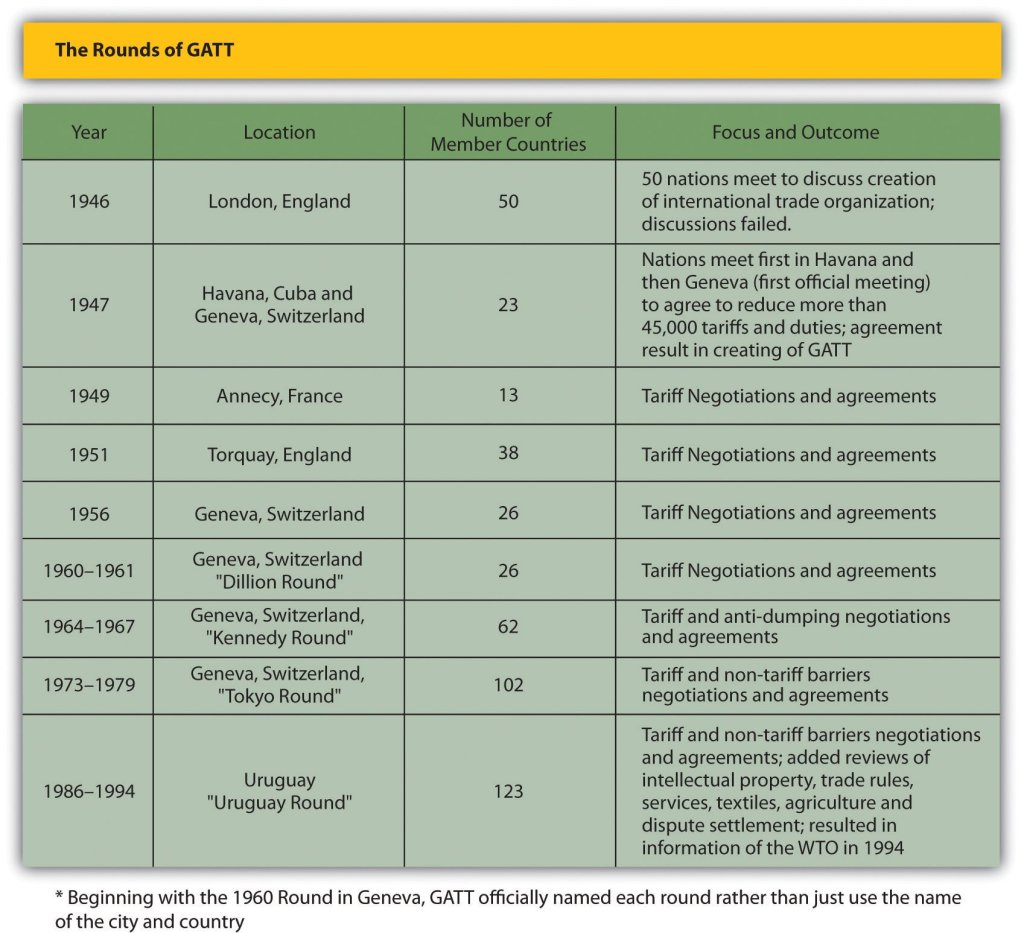
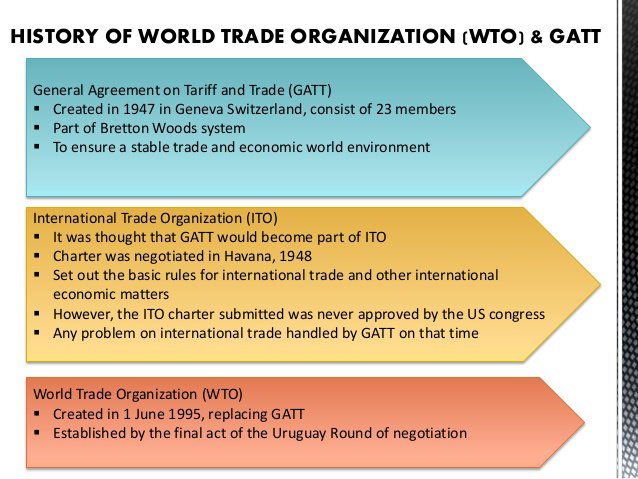
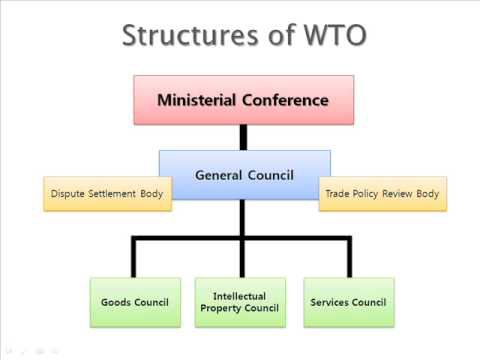
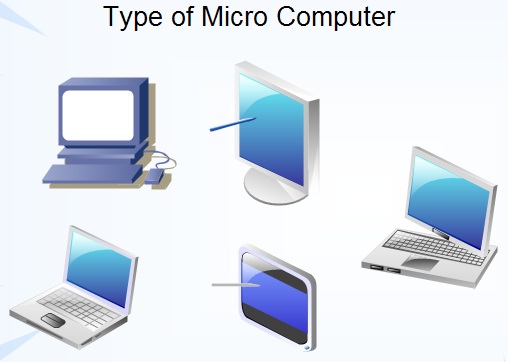



![Tianhe-2 [TH-2/MilkyWay-2]](https://images-idgesg-net.cdn.ampproject.org/i/s/images.idgesg.net/images/article/2018/06/tianhe-2_milkyway-2_national_super_computing_center_in_guangzhou_professor_yutong_lu_1200x800-100762103-large.jpg)


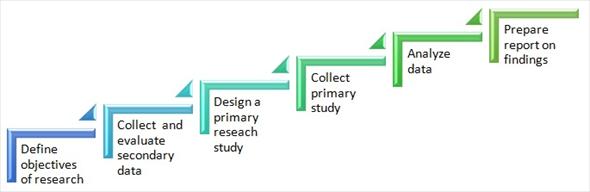


 International Trade